Protect Medication Abortion
Add your name in support of access to the safe and effective medication used in 63% of all abortion care nationwide.
Formerly NARAL Pro-Choice America


We advocate for our right to abortion, birth control, paid parental leave, protection from pregnancy discrimination, and so much more.
Add your name in support of access to the safe and effective medication used in 63% of all abortion care nationwide.
Equip yourself with the facts. Here you’ll find explainers, deep dives, and other resources on reproductive freedom.
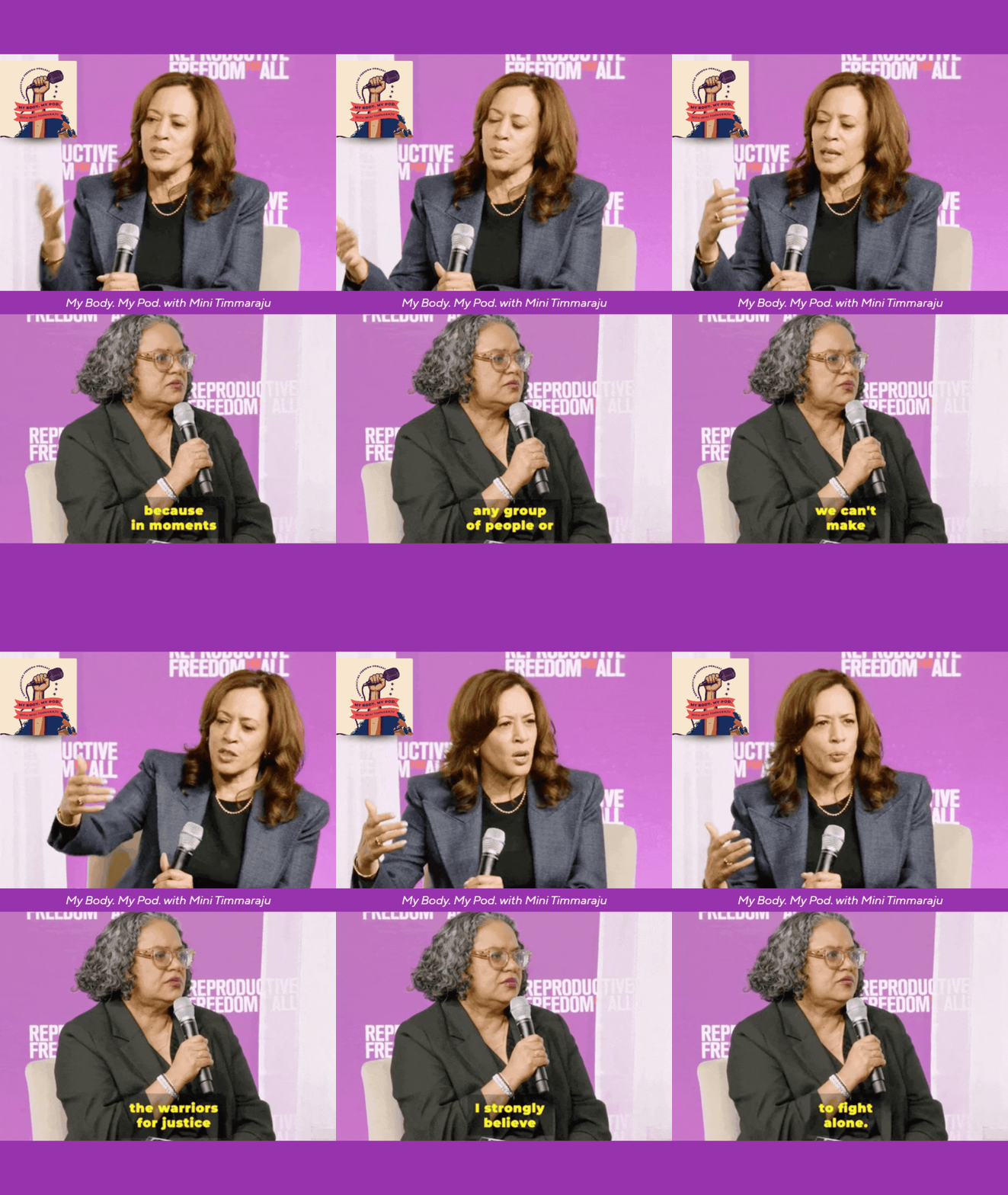
Pollster Molly Murphy breaks down the blue tsunami on My Body. My Pod. with Mini Timmaraju.
Our electoral efforts connect voters with opportunities to make tangible change to help build a future where everyone is free to make their own decisions about their bodies, lives, and families.
We elect reproductive freedom champions from statehouses to the White House and protect and expand abortion rights and access through ballot measures.
Under a second Trump presidency, attacks on reproductive freedom have been relentless. But we’re tracking and fighting back against this extremist anti-abortion agenda.

Project 2025 is no longer just a “plan,” it’s a checklist of extreme policies being implemented at an alarming pace.
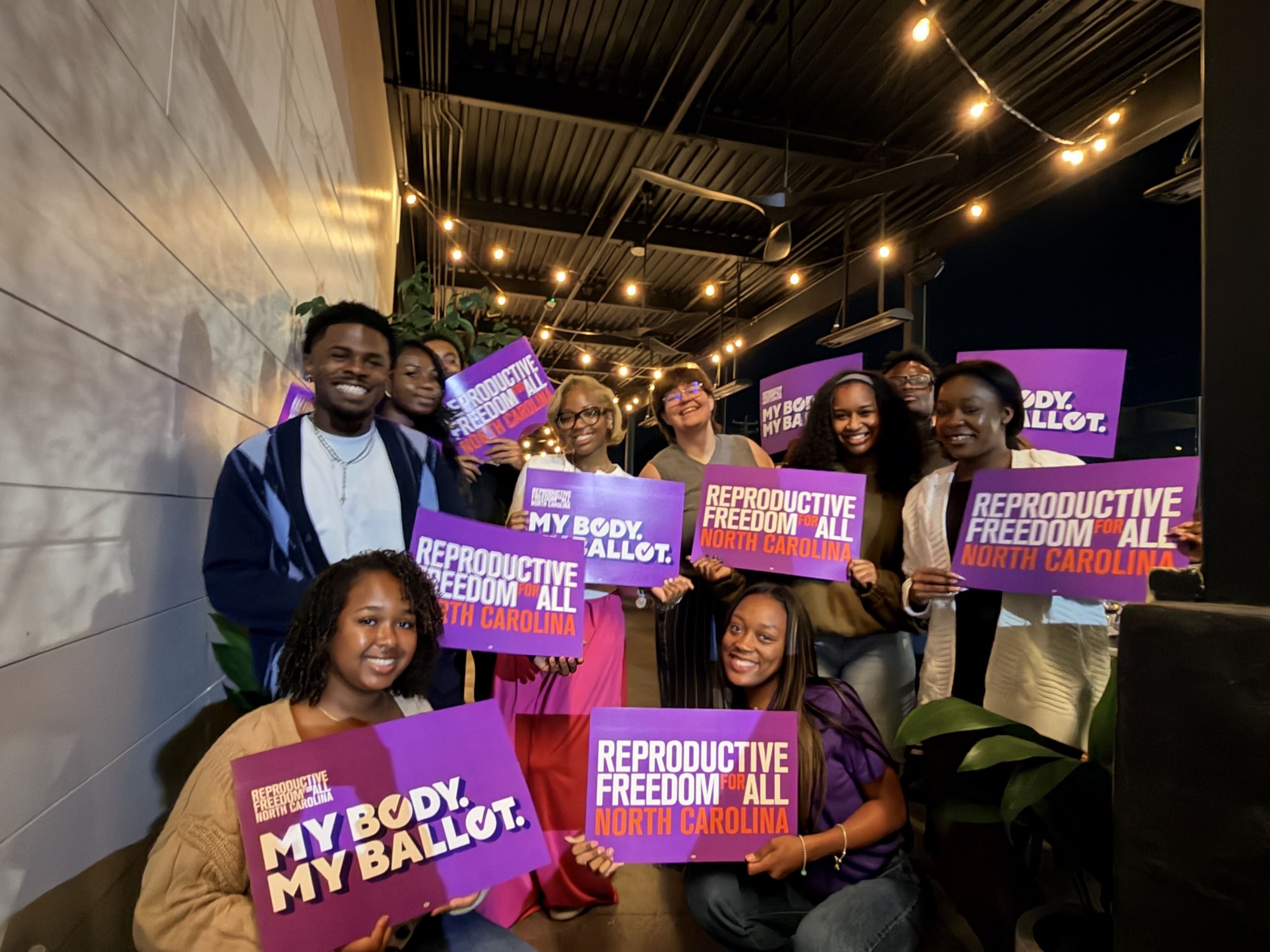
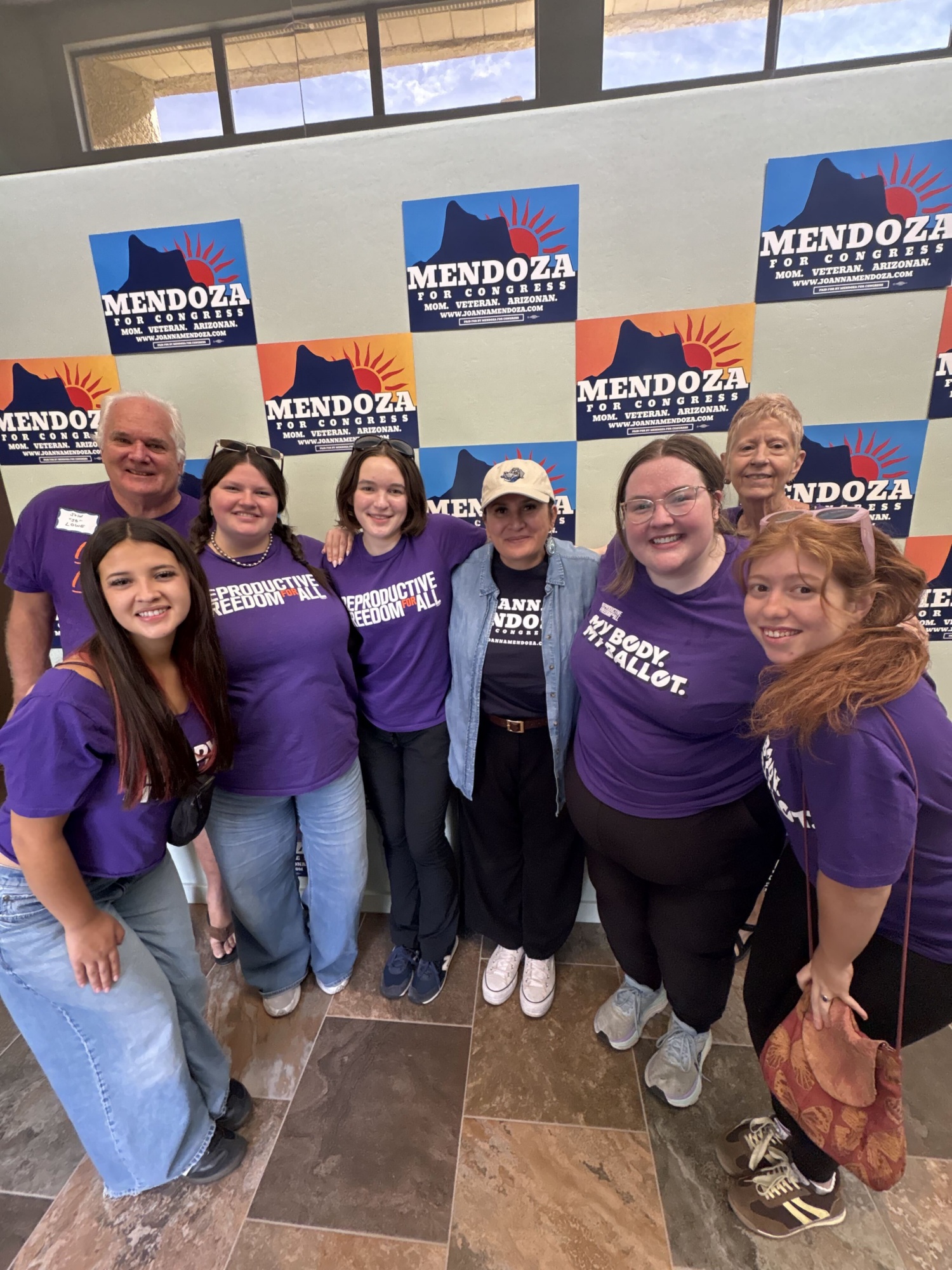
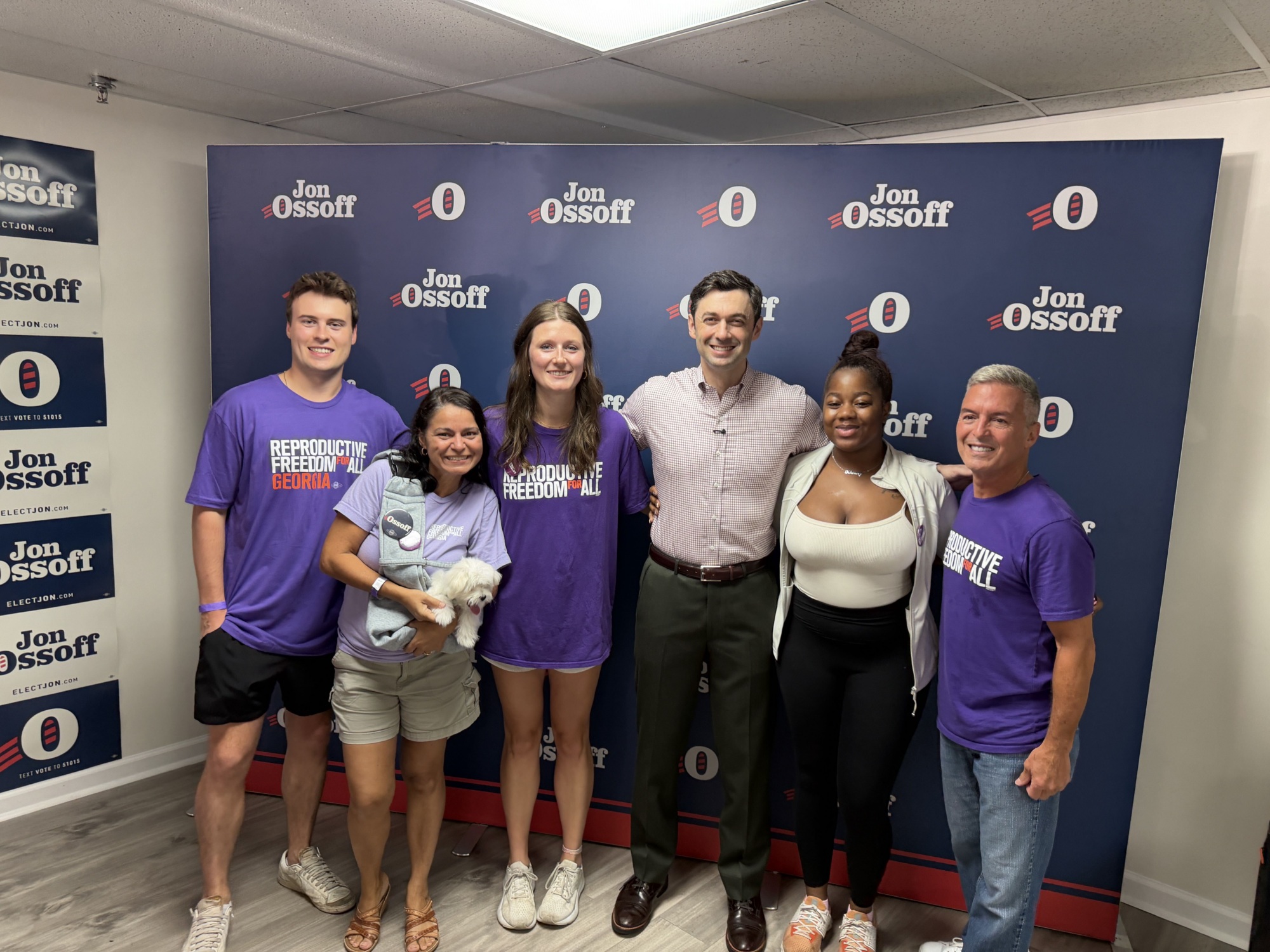
Mobilize your community. Hold lawmakers accountable. Organize for reproductive freedom!
There are so many ways to get involved, both in person and virtually. Sign up today to get started.
Stay equipped with the facts on abortion access, how bans are impacting your community, and more.
Deep Dives Reproductive Rights
Deep Dives Reproductive Rights
Explainers Reproductive Rights
Abortion helped shape the 2026 midterms and we’ve got the receipts.
Molly Murphy, President of Impact Research, returns to My Body. My Pod. with Reproductive Freedom for All President and CEO Mini Timmaraju to unpack new post-election polling on how reproductive freedom helped drive historic Democratic victories in the 2026 midterms—and why voters are demanding bold action from Congress.
Molly Murphy
Voters are looking for a lot of action from Democrats coming into Washington. They want to stop the war and they want to stop the corruption. They want to undo the Medicaid cuts. They want to fund Planned Parenthood. But what we found is they also want abortion rights protected in all 50 states, and it will be popular policy when they do.
Mini Timmaraju
Absolutely.
[opening title sequence plays]
Mini Timmaraju
Welcome to My Body. My Pod., a reproductive freedom podcast. I’m your host, Mini Timmaraju, president of Reproductive Freedom for All. I’m going to just jump right in here. You guys abortion was a BFD this election in red states and blue states and everywhere in between, the eight in ten Americans who support reproductive freedom made a tremendous impact at the ballot box.
Mini Timmaraju
To our members, our volunteers, our organizers, and each person who woke up every day and refused to give up. This victory belongs to you. Thanks to your hard work, Democrats won the House. We won the Senate. We won governors races, flipped state legislatures, secured reproductive freedom trifectas and elected champions up and down the ballot. And we defeated some of the really dangerous anti-abortion extremists who would have had an enormous power to do real harm. And now we’ve got the results and we’ve got the receipts. Joining me today is Molly Murphy, president of Impact Research, to break down what moved voters, what worked, and what comes next. Molly, welcome back to the pod.
Molly Murphy
Thank you for having me. I’m happy to be here.
Mini Timmaraju
Excited to have you back. And thank you for all of your work and your colleagues’ work in this cycle. We were just talking about how tired we are and vacations and plans to see our kids.
Molly Murphy
Oh, man. What do they look like?
Mini Timmaraju
I know, my God, my, my kids are pretty irritated at me right now, but they were very excited to know that we had won all of it. So, that’s a nice thing to sacrifice time and effort for. I’m going to dig right in. We worked together with you to do exit polls, in a lot of the races where our organizations, transparently, spent the most money. And those included, the Maine Senate race and multiple House races in battleground states. Some of those are the states where we won trifecta, where we’d run ballot measures. So there was a lot of important, useful data we wanted to understand about voters and how they were thinking. Your research found that 53% of those battleground voters said abortion played a role in their vote.
Mini Timmaraju
And this is important. And the reason, other reason we wanted to do this was it feels like every cycle, and I’ve now worked with you, I think, in like 3 or 4 cycles since I took this job. This is my fifth year. I’m celebrating my fifth year. We have to keep proving to our friends over and over again that abortion matters. And I don’t mean that as a dig on our friends. It’s just there’s such a, we’re in an environment where there’s so many issues competing with each other for attention, and you need those healthy reminders to policymakers that this is still important. So you went and you did these exits in these races, and you found 53% of those voters found that abortion played a role. Can you talk me through what that means and what happened?
Molly Murphy
Absolutely. So first off, the way we asked the question is on a 1 to 10 scale, how big, how important was this issue, that issue, you know, and gave a list in terms of determining your vote. And what we found is that 53% said that abortion was a 7 to 10. I mean, really like at the upper echelon of their concern.
Mini Timmaraju.
Wow. Out of 1 to 10.
Molly Murphy
Out of 1 to 10. And so I do think that starting there that says, you know, that a lot of people register abortion as a concern when they go vote. It wouldn’t be true to say that it was the top issue, cost absolutely was the top issue. Corruption was a top issue. We also found that in the poll. But what I say all the time is that there is not a single voter out there that says only one issue matters to me and my vote. Voters take in a composite of a lot of different things, and the way abortion gets used in helping voters make up their minds. Is it, yes, it’s about the policy. If you support a ban, if you support deep restrictions, if you support letting politicians make up, you know, the decision instead of the person. Yes, that is a policy.
Molly Murphy
But also when voters hear that an elected official or a candidate is opposed to abortion, that says a lot to them about values in terms of more widely how they’re going to govern. And so they apply that into lots of other ways. And I think that’s the most important thing that we forget about when we categorize things for voters. Voters aren’t putting things into different blocks and silos. They’re weaving these things together to decide who is on my side? Who is going to fight for me? Who cares about me? And abortion is part of that, even in an election that isn’t going to be defined in the headlines as an abortion election.
Mini Timmaraju
And you worked, in addition to doing this exit polling, you, your firm worked with some of these candidates directly and saw the impact of some of these ads. I also want to say you, you did some research for us earlier in the cycle to talk about, so we could dig into how best to message on reproductive freedom in this climate. And we knew affordability was going to be the dominant theme. That was obvious from 2025. So you had helped us already refine it. So as a result, in our ads, when we were on the doors, when we were talking about this issue to voters in these same battleground districts, we were thinking about abortion the way you just framed it, almost like a cross-cutting issue that indicated to voters where a candidate was on cost, on corruption, on the chaos in Washington.
Molly Murphy
On helping families.
Mini Timmaraju
On healthcare. Abortion is healthcare. So we were trying to talk to voters about repro in many different ways, not just one way. And I think it was really successful. And we saw it pop in ads and advertising and messaging from a lot of candidates. Let’s talk about Maine, where you did some work. We also did our exits. We did a lot of work. And Troy Jackson, who was a guest on this pod, and we spent a lot of time talking about, talking about Troy and talking to Troy this year.
Molly Murphy
So absolutely, and my partner, my firm was Troy Jackson’s pollster. I personally was not, but our firm, I did get to have sort of a second row seat to watching some of that. So the the post-election poll.
Mini Timmaraju
And that was a chaotic race.
Molly Murphy
Yeah.
Mini Timmaraju
For many, many reasons. As a reminder, for folks, that was the Graham Platner race. He dropped out. Troy was a last, was a late addition. It was like August.
Molly Murphy
I mean, I mean, and it went down to the convention. I mean, it was a convention where he was chosen. It was very unexpected. He had run for governor, which is why he was a logical candidate to kind of enter the Senate race. And he had done well in that gubernatorial primary. Good profile, understands Maine, understands Mainers, obviously very qualified.
Molly Murphy
But yes, it was a late breaking Senate race and so do- it was interesting to do the post-election survey and just kind of understand after voters voted, they, they made this decision to break with what they had always done, long serving incumbent Susan Collins to vote for Troy Jackson. And digging in on this issue was interesting. And one of the things that we found is that voters heard a lot about Susan Collins’ views on abortion, and they heard a lot about Troy Jackson’s, and they ultimately came to the conclusion that Susan Collins did not share their views on abortion. 47% said that Susan Collins does not share my views on abortion. Only about a quarter said that she did. And when we did a follow up question and asked, okay, well, is it because she supports more restrictions or fewer restrictions than you? You know, when you say different view, what does that mean? Over 80% said it’s because she supports more restrictions on abortion.
Molly Murphy
And I think for a typical Republican, that might not surprise your listeners because people tend to assume Republicans support more restrictions. But Susan Collins was able to survive the political gravity of a blue state, in part because her brand was that she supported access to abortion because she was not going to be a vote against it. And I think because of the communication that you all did, the Jackson campaign and just what she did in her, you know, last few years in the Senate, even before her last election, frankly, really said to voters that’s not the case anymore. And so whether it’s that she’s changed or that the wool was being pulled over my eyes and it’s not, this issue did differentiate her. And I think it, part, it was part of the overarching narrative that the Jackson campaign used against her, which is she’s for Trump. She’s not for Maine. She had always been this person that said, you know, I deliver for you when I’m in Washington. This is such a powerful example of not delivering for Maine and going along with Trump and with the party and all of those things on a really important issue that is both literally important, but also was important to her brand.
Mini Timmaraju
There were a couple of things that you said that I want to, like, just pop out from what, from the content we put out, but also what we watched some of the superPACs do, the Senate, SNP, but also what I saw Troy do on the stump. So one thing is that, Troy, as you said, the unifying theme across the board was she’s with them, she’s with Trump, that she has sold her soul. She doesn’t represent Maine, she represents Trump and MAGA. And so her unwillingness to apologize for her vote for Brett Kavanaugh was really important. There were a lot of reporters who pointed out to me, I don’t know about this Kavanaugh argument you guys are collectively making. She, it didn’t work last time because she did have an election after the Kavanaugh vote. But this is the first one since the Dobbs decision. Yes. So the Kavanaugh vote, we’ve had historically many Supreme Court justices who were Republican nominees, who moderated when they got to the court. And I think Mainers were willing to say, oh, we’re going to give her the benefit of the doubt. Maybe she knows something about Brett Kavanaugh that we don’t know.
Mini Timmaraju
Well, Dobbs undid that number one. Number two, the state moved further in response to Dobbs than she did on the record. This is important. The state has one of the strongest, most progressive, broadest abortion laws in the country, that is way more progressive than the legislation that Susan Collins herself filed in the Senate. And her biggest defense was, well, I have my own bill. Well, her bill is significantly weaker than the state standard. And I think she really just thought no one was going to pay attention to that.
Molly Murphy
Yeah, she did not adapt. I totally agree. Dobbs makes it real in ways that I think voters could say, well, I don’t like that she voted for Brett Kavanaugh. Certainly they didn’t like that in her 2020 election. But,
Mini Timmaraju
It wasn’t enough.
Molly Murphy
Dobbs was, or Roe was still there. And so in some ways, it was a hypothetical argument for some of these voters. The other thing I will say is that her 2020 election was in the midst of Covid, when delivering for your state mattered a lot. Getting PPE, getting tests
Mini Timmaraju
Her appropriator role.
Molly Murphy
Right. This role mattered a lot more, and it is much harder in an environment where people feel like life has gotten significantly harder. Saying “I delivered for you” and you are not happy with how things are going in your life also falls short. And so you weigh all of those things together, I think even in this environment, even if Roe was still there, that Kavanaugh argument might have even been more salient. But yes, after the Dobbs decision, it is just I mean, from the longest outset, knowing she was up in ‘26, this has been the discussion is, in a post-Dobbs world, how does Susan Collins look voters in the face and say, “I protect your abortion rights?”
Mini Timmaraju
Then I think the other layer to it was the Big Beautiful Bill, the big ugly bill, as we like to call it, but as Trump calls it, beautiful. And this was something I saw Troy do over and over again that I thought was so brilliant and smart. And he has sort of a folksy, sort of very natural way of speaking that is very resonant to the average Mainer. And he kept saying, you know, it doesn’t matter that on final passage she voted against it. She only does that when it’s convenient to make herself look good. When it matters to Trump, she votes with him. And she voted to get it out of committee. And I was like, you know, that is a very salt of the earth way to explain to folks the difference between voting something out of committee and voting on final passage. You say those words to the average voter, they glaze over. But she’s like when it was when it was useful to Trump, she did what she needed to do for him. And they were like, oh, you know what? There’s a pattern of that.
Molly Murphy
Yes. And I think it also looks like someone who wants to treat Mainers like they’re stupid.
Mini Timmaraju
Yes. And has been.
Molly Murphy
And I think that that was also something she sort of consistently got caught up in is always having this kind of double speak about, oh, I actually was against it. Oh, I actually am against it. When her voting record does not prove that she might again always vote against the final. But that’s a deal she’s made. And I think that it just contributes to this sense of distrust in Washington.
Mini Timmaraju
100 percent.
Molly Murphy
Not someone who’s going to be on the level with Maine.
Mini Timmaraju
And the final like indictment that he made was if she wanted to, if she wanted to really fight for us, she would.
Molly Murphy
Right.
Mini Timmaraju
And I don’t know if I were the most powerful Republican appropriator, I’d be throwing a fit every time Trump tried to defund Planned Parenthood which she says she’s a champion of. Every time Trump tried to gut women’s healthcare in my state, I’d be throwing a fit.
Molly Murphy
Yes.
Mini Timmaraju
And she’s not.
Molly Murphy
No.
Mini Timmaraju
And that, really the whole, and that taps into the whole, “I’m so concerned. But I’m not doing anything about it.”
Molly Murphy
“Deeply concerned” is not changing people’s lives, no. Being deeply concerned about something is, is not what elected officials should be saying they should be doing. Yes.
Mini Timmaraju
So I feel like, and I feel confident saying this now that the race is over, especially, Troy Jackson was who Graham Platner was supposed to be, right? The Mainer, salt of the earth, you know, working class. But he turned out to be the perfect foil for Susan Collins from a personality perspective. But he was also able to deliver the indictment in such a perfect, believable, authentic way.
Molly Murphy
He was speaking for Maine.
Mini Timmaraju
And he tapped into their anger. And it was, it was masterful. And I think nobody really believed we were going to do this.
Molly Murphy
No, I mean, I saw somebody the day before the election and they said, I’ll believe Susan Collins is losing after she’s lost, because she has been someone who has always figured out a way to win. I mean, all credit to her, she is a masterful politician.
Mini Timmaraju
She is.
Molly Murphy
And so you shouldn’t underestimate someone like her. I think it’s wise for people to go into the election being dubious. Not because Troy Jackson wasn’t the perfect candidate, not because he, you know, made any missteps. None of that. It wasn’t based on, oh, he did this or he did this or this was wrong. It was just simply, well, I can’t believe that she could go down. And so I do think that he, it had to be him. I think it had to be in this political moment. I think incorporating abortion into the dialog on it was really important. And another way of deepening the Trump hit, because I do think that Trump.
Mini Timmaraju
It was a proof point to all the major themes.
Molly Murphy
That was meaningful. And it wasn’t just, oh, she backs Trump. It’s backing him in meaningful ways and ways that are hypocriful to the way she acts when she’s back at home.
Mini Timmaraju
And really offensive to her base of leans-independent white women in the state.
Molly Murphy
Yeah, and needing to peel off a lot of democratic women.
Mini Timmaraju
Yes, yes. Let’s talk about, I could talk more and more about Maine, but we can’t spend the whole podcast on Maine. Maybe we’ll do another one. But, let’s talk about Michigan, because man, that got crazy in the end. Like really bonkers crazy. But, you know, we’ve had it, we, we did a, we did a live pod with Elissa Slotkin. And we’ve spent a lot of time in Michigan. We knew Mike Rogers was uniquely vulnerable on abortion rights. And he knew it, too, because he was scrubbing his record as fast as he could. But luckily, we had just run an entire campaign against him in which this was the top, salient issue. You did a lot of work as well with Abdul, and you did a lot of work with us. Let’s talk about Michigan
Molly Murphy
And Elissa Slotkin. I ran against him two times. Two times I have, I have beat Mike Rogers twice.
Mini Timmaraju
On this issue.
Molly Murphy
Yes, on this issue.
Mini Timmaraju
So yeah, let’s dig into that.
Molly Murphy
Yeah, absolutely. So, so Mike Rogers, back when he was in Congress the first time, did what all the Republicans in a pre-Dobbs world did, which is promised to ban abortion every way you possibly can, signs the questionnaire saying he’ll ban abortion, votes for the things that ban abortion.
Mini Timmaraju
Celebrates terrible things like the Dobbs decision.
Molly Murphy
Completely. And so he had a long rap sheet when it came to this, and he tried to clean up his record, even, you know, Michigan the year before, or in 2022, codified abortion rights in the state. He was living in Florida at the time. Instead of saying, oh, I, you know, I’m so against it. He said, well, I wasn’t in the state to vote on it. Right? Like, you kind of can see those little inklings of a politician trying to clean their own record, but in really ham-handed ways. And so, yeah, it was, it was utilized in 2024 against him when he ran against Senator Slotkin. And we used it again in the race with Abdul. Now in that particular, you know, construct.
Molly Murphy
And the ad that we did, it actually was a contrast ad, because Abdul is a doctor and he is also a father of daughters. And so he wasn’t just speaking about it, which I think in most places you run it as a negative on your opponent. You just strictly are going against the Republican. They’re bad on this. Democrats have a lot of built in advantages. I, as a Democratic strategist, often say you don’t need to do the positive as much as you need to triple down on the negative.
Mini Timmaraju
Don’t need to extra-crediential yourself.
Molly Murphy
Right, you don’t. Yeah. People assume you’re good on it. So let’s spend the time talking about how bad your opponent is, which gets more mileage. In this particular case because of his background as a doctor, and they were running him as, you know, not relatable at all, whether it’s Hassan Pike or whether it’s Muslim Brotherhood. They were pulling out all the stops to change his character. And being a doctor and being a father of daughters is two very grounding and admirable things. And so it really worked as a contrast in this race.
Mini Timmaraju
It was a very beautiful ad.
Molly Murphy
It was, I, thank you, I will relay it to the ad makers. We loved it, and it was a rare instance where I thought contrast actually is what is needed, because it cools down the temperature on all the crazy that they are trying to do on the Republican side to make him scary. And what we heard in focus groups, especially with these non-college women, is for Mike Rogers to be against abortion is a deal breaker. And it reminded them who Abdul was, and it was not the version that they were trying to make him. And guess what? When people hear that a Republican is against abortion in all cases, they think that person’s extreme. It was our best weapon on extreme against what they were trying to do to Abdul.
Mini Timmaraju
Which was make him extreme based on his name and his faith.
Molly Murphy
Based on stereotypes. Yes.
Mini Timmaraju
Right, right. Really nasty stereotypes.
Molly Murphy
Like the nastiest ads you’ve seen.
Mini Timmaraju
We did an event with him and Kamala Harris in Michigan. It was a Black Women’s Health, Maternal Health roundtable. And that, he really shines in those moments because he’s able to be authentic. He was able to, you know, dig into his experience as the public health director for Detroit. And he understands the stakes for Black women, particularly. Right? So as the former, you know, lead public health advocate for the city. So I think that contrast is so important that credibility is so important. There’s so much more in the data. I want to make sure I’m not missing anything. What else really struck you about some of these battleground races and how voters were thinking about abortion?
Molly Murphy
Sure. So we, we talked about the Maine exit already, and just that they felt like they heard a lot about it. They decided that Susan Collins did not share their views on abortion because of restrictions. We didn’t talk about the congressional sample. So we did a thousand interviews in congressional battleground districts. And what we were able to do is sort of segment within the sample, a universe of voters who were in districts where abortion was part of the paid communication bloodstream, whether that was targeted digital, whether it was broadcast television ads. We weren’t going to try to like split hairs, but it was really just in the, in the bloodstream. And then we picked some similar districts, but where at least in a measurable way, abortion wasn’t part of the paid communication environment. And we did see that in the districts where abortion was more heavily communicated on, voters were more likely to say they felt differently than the Republican.
Molly Murphy
There was a bigger gap between people who said, I think the Republican has a different view on abortion than I do, and they support more restrictions. It was a higher level of people who didn’t know where the Republican was on abortion, in the districts where it wasn’t part of the dialog, but it really, the differences were within some of the individual subgroups. So, for example, with younger women in the districts where abortion was part of the paid communication, the part of the advertising for younger women, 42% of younger women gave abortion a ten out of ten on how important it was to them when they went in to vote, compared to in the control that the sort of non communication districts, just 31% of younger women said it was a ten out of ten. That is a pretty big and vast difference. And younger women were the recipient of disproportionate targeted communications. So they are probably more likely than any other type of voter, if it’s targeted. You know, if it’s not on TV to be getting that communication, it made the issue more important when they got that information.
Mini Timmaraju
More sticky, more salient. And we know that some of these big swings that happened happened because of younger voters and younger women.
Molly Murphy
Yes, exactly. And we also saw that in, two things that I think were striking. One is the contrast with the Republican candidates. So when we ask, you know, 40% said, I mentioned this already, but the exact numbers are 40%, if they were getting communication, said that the Republican had a different view on abortion than they do, they did, compared to just 32%, if they didn’t,
Mini Timmaraju
Get that communication.
Molly Murphy
get that communication. And the difference was the “don’t know” answer. They weren’t saying, “oh, I think the Republican’s great.” They just weren’t sure where they stood. But the gap was even bigger among non-college women, 43% versus 21%. And those non-college women are a crucial swing block in this election. And they had a more certain understanding that these Republicans were on the wrong side of the issue. We also just saw that Republicans in the districts that got negative abortion communication against them were less popular than in the other districts. We still won in those districts, but they were specifically unpopular. Their unfavorable rating was 12 points higher in the districts where they got abortion communication.
Mini Timmaraju
I think this might be the first year we’ve won white women collectively.
Molly Murphy
Collectively we won white women. That is correct.
Mini Timmaraju
And the loss historically for us with white women is non-college.
Molly Murphy
Is non-college. That is why. So we won white women. We did.
Mini Timmaraju
We might potentially find out that repro was the thing that pushed those white women over. And we cannot take, as we all know, white women for granted, period. And they are one of the most significant constituencies we need to win because we’re not winning white men uniformly anytime soon or by any significant numbers. So even though we, we had some modest gains with white men because we wouldn’t have had the sweep that we had. But what we’re learning, what, what your data indicates is if they’re communicated to, it makes a difference.
Molly Murphy
Yes.
Mini Timmaraju
So what does this tell us as we’re going? Well, well, I want to talk about 2028, before I go to 2028, let’s talk about the red states. They were all very good about committing to addressing these issues because in these states, South Carolina, Texas, and Georgia, we have some of the most egregious and deadly abortion bans in the country.
Molly Murphy
But I do think that voters are looking for a lot of action from Democrats coming into Washington. Right? Like they want a lot of things. They don’t just want the stopping, though they want that, they want to stop the war, and they want to stop the corruption. They want to undo the Medicaid cuts. They want to fund Planned Parenthood. But what we found is they also want abortion rights protected in all 50 states. And I do think that that is something that these incoming red state senators, in some cases, certainly governors, is a whole other conversation about the power that they have to make change on this. In our poll in the congressional battleground districts, 59%, whether they got the communication or not, right? Like it doesn’t matter. You don’t have to be told this is the record.
Mini Timmaraju
It didn’t correlate with how much they heard.
Molly Murphy
They said that they want to pass a law that provides protections for people’s rights to access reproductive healthcare, including abortion care. 63% in Maine, and 4 in 10 call it a high priority. And so as the new Congress comes in and as they are thinking about 100 days, 100 hours, whatever we want to call it, voters are not saying only do one thing. They want a lot of things to happen. And this is not controversial. This is not, you know, if Democrats put forth a bill that just codifies abortion rights in all 50 states in this country, that is not going to be viewed as extreme, it’s not going to be viewed as taking your eye off the ball from what voters sent you to do. It is none of those things. It is what these battleground voters are looking for, and it is popular. Again, you said we didn’t do exits in every state. I have done polling on this issue in very conservative states, and strong majorities support this.
Mini Timmaraju
And a case in point, in Missouri, a red state where they’ve passed abortion rights by constitutional amendment, there was an effort to repeal that ballot measure this cycle, and it failed because-
Molly Murphy
Substantially.
Mini Timmaraju
Substantially. And then in Nevada, we just passed it. Nevada is strongly now in our, in our corner. I think that was a really tough governor’s race that folks weren’t sure we were going to win. And we won it. Aaron Ford won it. And he ran on abortion rights as well. So did the AG. I will say anecdotally, both Gina Hinojosa and Keisha Lance Bottoms have made it clear that their plans are to repeal those abortion bans as soon as they can.
Molly Murphy
And it will be popular policy when they do.
Mini Timmaraju
Absolutely. And that was right out of the gate.
Molly Murphy
Yes. And I want all the political reporters and all of that to not say, “are Democrats being too extreme in their governing? Are Democrats taking their eye off the ball when they do this?” Because the answer to both is no, because to the average voter, this is common sense and the way it should be. And also, by the way, doesn’t stop you from taking on utility bills. Like, that’s the other thing. Like, we act as though you can’t possibly do multiple things at once. Voters want this. They are telling us they want this. They voted for this.
Mini Timmaraju
You work with so many candidates. Do you think that we’re finally hitting a generational shift where the, where this latest group of members of Congress understand the new, the new messaging, the new, where, where Americans are on this issue? Are less afraid?
Molly Murphy
I think so. I will tell you, I think it is generational. And also, to be honest with you, Mini, Dobbs happened and so you don’t have the luxury to secondary it anymore. And so I think they have to and I think they are, but I do think that that is you know, I think the other answer to your question is, so long as Roe was there, nobody had to feel like this was life and death, even though we all knew it was, right? But I think you had a lot of elected officials who didn’t try to get wise on what the messaging is, didn’t try to tap into, do people in this state want this protection or not, because Roe was always there as the backstop. So no matter what was going to happen at the state level, I think it did allow people to be dull.
Molly Murphy
And I don’t think this new generation of leaders takes any of that for granted because they’re watching these things, they’re watching women die play out. And so they have to be smarter on the messaging and smarter and more motivated on the policy. And I think that it does create more of an appetite for people to take action. And when it is generational leadership and you have a bunch of incoming millennial representatives, they’re watching their daughters, if they have children, you know, if they have daughters, but they’re watching, they’re the first generation to watch that. This is not grandparents thinking, “my grandchildren.” It is very different when it is your own child. And so I think that is going to matter a lot too.
Mini Timmaraju
So what does that tell us? All this data, which we will share and all of this really good analysis as we walk- 2028 has already started, for better or for worse, where I know looking at you, you’re looking at me. We’re like, we’re so tired. You have worked on multiple presidentials, and you’ve been polling for us and for other organizations in the battleground going into 2028. What does all of this data and the last two cycles teach us? And what is your top recommendation to a presidential candidate? If they come to you and ask you about how to talk about this?
Molly Murphy
I mean, I think the first thing is talk about this.
Mini Timmaraju
Talk about this.
Molly Murphy
Talk about this.
Mini Timmaraju
You and I did a, did a pod after 2024. And one of the things that stuck with me that you said that I also think applies to this cycle, even though we won, is we didn’t talk about it enough.
Molly Murphy
I think that’s completely true. So in 2024, I think a lot of people thought that the Harris campaign was advertising heavily on this, and they were advertising on this, but it would come up in stump speeches. And I think stump speeches drive coverage more than, what is the actual voter who doesn’t watch a stump speech, which, by the way, is like every swing voter has never seen a stump speech in their life. And so they weren’t getting that much on this.
Mini Timmaraju
Stump speeches are for the base.
Molly Murphy
Yes, exactly. Like for the base of the base, the donor base. And so, I think that there, there was a misconception that there was too much talk about it. There, actually, to the voter in their mailbox, on their phones, on their TVs. It was part, but it was not a significant share of what the advertising was. And Trump spent on it. And Trump was saying, I’m not going to do anything on it. I’m going to leave it to the States.
Mini Timmaraju
And Trump spent on it because he knew he was vulnerable.
Molly Murphy
He was vulnerable on this. I think going into 2028, I think one: people care, I think, more about where the president is on something like this, than an individual member of Congress or, you know, Senator, and what this data tells us is they care about that, too. They care about where these people are, but where the president stands on it matters, talking about this matters. And I do think that this is our first open primary system, on both sides, by the way, post-Dobbs, that this is going to be aired. And I think that the Democratic side needs to be unafraid to raise this as a priority, to make sure that people in every single state in this country have the same access to abortion and not raise that like it is a controversial thing, but it is basically their starting point.
Molly Murphy
There’s nothing less than that. There’s nothing short of this. And also talk about it much more through the linkage of what it means for healthcare in this country, what it means for people’s lives, and also what it means for our economic health. I mean, all of the data we’ve done with you points to voters believe that having a child is the most significant economic decision a person will face in their lives. Does that mean that we say, oh, if we, you know, the economy would be worse because of abortion bans? No, that’s a, that’s a strange way of putting it. And it’s not the way people think about it, but recognize that people tie their ability to plan their families and have the families in the way they want to with their own financial futures.
Molly Murphy
Those two things are inextricably linked and be able to talk about it. The other thing is, tactically, because I’m a Democratic strategist first and foremost is you’ve got a Republican primary and they are going to be scared “s-less” about how they’re going to get through a primary being against abortion, because that’s, the only people out there against abortion are Republican primary voters. And how they’re going to be able to get elected.
Mini Timmaraju
And they’re already freaking out and putting a ton of pressure on Trump, this administration and the incoming class of potential presidential contenders to be more vocal on this, so much so. And we should take them seriously because just a few, just yesterday, news broke that the Trump administration is intervening in Texas in a case against Planned Parenthood because Ken Paxton won’t be there to shepherd the case anymore. So they are, we take them seriously.
Molly Murphy
They are. I mean, so if you think about this, Trump never had a real primary in his 2024. He walked into it. Okay. So that would have been to litigate. Okay. Well what are you going to do on abortion? What are you going to do on abortion? And where are you going to fall on the court’s decisions? And is, are you going to ask Congress to pass a ban? All of that, that will get litigated now. The Republican candidates know where the primary voters are and they know where the general election voters are. And so I also think that on the Democratic side, we need to make this a defining issue of the Republican primary as well, not just national ban or not, but get into it. What are we talking about when it comes to mifepristone?
Molly Murphy
What are we talking about when it comes to IVF? Talking about all of these things, because the other effective thing we can do, Trump was able to wriggle his way out of all of his horrible record on abortion because he didn’t have a primary, because he told people he would leave it to the states. We cannot allow the Republican primary to play out that way in 2028. Otherwise, you allow voters to think “maybe nothing is going to change on it. Maybe all I have to do is just ignore this issue in my mind.” And so we need good Democrats who are willing to talk about what they will do for it. But we really need to make sure that these Republicans are forced to answer for where they’re going to be on this, because it’s not going to be in a good place, as we know, they might try to wiggle out of it or try to, like, kick it down the road, but we cannot let them do that.
Mini Timmaraju
So what are some ways, so I can already like off the top of my head, rattle off like several 2028 contenders who’ve already come out of the gate talking about abortion. You know, Governor Shapiro in Pennsylvania has already posted about what now that he has a trifecta, these are the things he could do in the state. Governor Pritzker has put out his agenda that he thinks Congress should pursue, which I think we can all read between the lines and say is, is a, is a early draft of a presidential agenda. And I’m sure I’m missing others who are tweeting and posting about what abortion rights. Elissa Slotkin just posted a video from one of our events talking about the need for Congress to immediately act on abortion rights. And I’m sure there’s others who I’m missing. Those are just the ones that were in my feed today in my brain.
Molly Murphy
On November 9th.
Mini Timmaraju
But what should they be doing? To your point, how do we make this sticky for Republicans?
Molly Murphy
I mean, I think that as Republicans are launching their campaigns, it is the, okay, they’re not going to put in there, you know, here’s what I’m going to do. Their J.B. Pritzker equivalent of like, here’s what I’m going to do. They’re not going to say, by the way, I’m going to ban abortion.
Mini Timmaraju
Maybe Josh Hawley if he runs for president.
Molly Murphy
Yeah, maybe some of them. But making sure that reporters and press and supporters are asking this question, “oh, this is missing from your platform, or are you going to follow the Republican platform on this, or you’re going to go-”
Mini Timmaraju
Or you voted for an abortion ban six times, where is that on your agenda?
Molly Murphy
Where is that? Or I’m stumping in, you know, a state that has, you know, I’m stumping in South Carolina. Do you support South Carolina’s,
Mini Timmaraju
Abortion ban.
Molly Murphy
current ban on abortion, which you what do you think about that? So I think all of those things, every opportunity, not just asking once and saying, “oh, they said that they, you know, support a exceptions for the-” that’s I mean, I think that’s the follow up is not allowing them to say, “well, I support reasonable exceptions or I support access up to 16 weeks,” whatever. All of those, by the way, are abortion bans and there are no reasonable exceptions. And making sure that then they are talked about as their plan is to pass a national ban on abortion that does not include any restrictions that will save lives. And I think that’s the other piece, too, is I think what will make me crazy ahead of time is if we have a wide field of Republicans, let’s say there are eight, they’re, you know, they will put 2 or 3 of them in the reasonable abortion category for only supporting a national ban on abortion. Like that is what will happen is they, you know, just press likes to cover this as like an accordion, or like a spectrum. And there will be some that I think probably-
Mini Timmaraju
And they don’t like to interrogate.
Molly Murphy
No. And so I think that what will make me sort of crazy is that some of them will get framed as being reasonable, despite having an incredibly unreasonable record, because of the desire to show that we have a range of perspectives on this issue in the Republican primary, when in fact we don’t. It’s just a question of how, how banned do you want your abortion to be?
Mini Timmaraju
Yeah, we saw this happen, I’ll say quickly, because I know we’re almost out of time. We saw this happen in Minnesota with Michele Tafoya, who kept calling herself a pro-choice Republican and come to find out, what she supports is a 12 week abortion ban.
Molly Murphy
Yes. A ban. A national ban.
Mini Timmaraju
Which we had to keep reminding press in Minnesota and national press is more extreme than what Virginia tried, Glenn Youngkin tried to get away with and was repudiated in Virginia, which is more conservative than Minnesota. So what are you talking about? Minnesota has one of the most progressive abortion laws in the country as well. But they were willing to preprint pro-choice Republican over and over and over again. And it kind of got a little sticky with her In the end. We had to proactively keep reminding folks. And that was really disturbing because a 12 week ban is very obviously a ban.
Molly Murphy
A ban. Yes. I mean that, that is where I fall. That is where I, I think the sort of what can we do? I think there’s the, make them answer for it, make them answer for it every single way because they will try to wiggle out. So if they are in a, sitting in a state, if they are campaigning in Georgia. Do you support the six week ban? And now, hopefully, we have a new governor and we won’t have it soon, but they, they have-
Mini Timmaraju
Well, it’ll take a little bit of time.
Molly Murphy
It’s going to take time. And so do you support this state’s six week ban on abortion, yes or no? And okay well would you instruct, you know, if you’re president would you push the Congress then to overturn that? You know, do, do what you need to do nationally in order to do it? They’re not going to say yes. And then I think the flip side is always the not allowing restrictions to be framed as reasonable that voters don’t believe are reasonable. And that’s exactly what you’re describing. And I just know that will happen, because there will be a couple who are not as draconian as others in the field, and they will get characterized as being- I mean, this happened with Nikki Haley. I mean, this I mean, this happened when she was running. I mean, and it got, she was like a moderate on abortion. Even though her record was supportive of,
Mini Timmaraju
The ban in place in the state.
Molly Murphy
The ban. But she just talked about it in a softer voice. And so.
Mini Timmaraju
And she was a woman.
Molly Murphy
I don’t mean that, I don’t mean that in a woman way, I mean softer voice as in like, “I get the concern on this issue.”
Mini Timmaraju
Well and she was a woman and she’s brown and people just don’t have, they have a hard time. I think that was half of the deal with Michele Tafoya.
Molly Murphy
I think so too.
Mini Timmaraju
Like we just don’t, we have a hard time believing that they can be anti-women. So that goes for abortion. But it also goes to things like care. It also goes to things like paid leave. It’s hard to believe that these women are anti-feminist. I think it was a Susan Collins problem too for a long time. And I think that’s why a lot of folks didn’t think a man could beat her. Molly, there’s so much more we could talk about, but I know we got to wrap up. Thank you so much.
Molly Murphy
Thank you for having me.
Mini Timmaraju
For being in it, in this fight with us, for working with me and my team. You’re so, you’re you’re so good at unpacking this. And, we’re going to be counting on you to continue to train and coach your clients who are now in office.
Molly Murphy
Passion project, too.
Mini Timmaraju
Oh my God. We were, we were joking around, folks about how it’s a good problem to have. But we have so many new friends in Congress, and a lot of them need a lot of catching up.
Molly Murphy
Gotta get them ready.
Mini Timmaraju
And that’s what we’re here for. So hopefully I’ll get to report back on that next time. We have a lot to celebrate. But let’s be clear, the other side isn’t backing down. They’ve told us that after the election, the gloves are off when it comes to this administration’s actions on reproductive freedom. And with Stephen Miller now serving as White House chief of staff, we know that the threats to abortion rights are not going away. But here’s the deal; our gloves are off, too. I don’t know if they were ever on, but they’re definitely off. We need to stay focused, strategic, and unrelenting. We need to build on what worked, evolve where needed, and keep fighting just as hard as we did in this election cycle, because winning election matters. But what we do with those victories matters just as much. And to everyone listening, thank you for being part of this movement. Remember, you matter and you have a role to play in this important work. Text POD, P-O-D, to 59791 to join us in this fight. Until next time.


Stay in the know
Reproductive Freedom for All is made up of members across the country who believe that everybody should be free to control their own bodies and lives—and we want you to be a part of it. Subscribe to be one of the first to receive updates on the state of reproductive freedom and opportunities to take action.