
Join Our Volunteer Elections Team
We're pulling out all the stops to ensure voters get out and vote for reproductive freedom candidates up and down the ballot, and we want you with us!
Formerly NARAL Pro-Choice America
We advocate for our right to abortion, birth control, paid parental leave, protection from pregnancy discrimination, and so much more.
We're pulling out all the stops to ensure voters get out and vote for reproductive freedom candidates up and down the ballot, and we want you with us!
Equip yourself with the facts. Here you’ll find explainers, deep dives, and other resources on reproductive freedom.
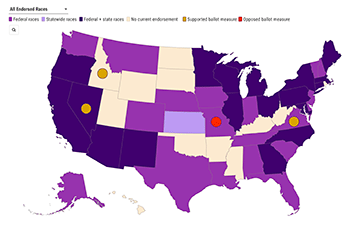
The key races we're invested in between now and November 3 to win back a reproductive freedom majority in the 2026 midterms.
Our electoral efforts connect voters with opportunities to make tangible change to help build a future where everyone is free to make their own decisions about their bodies, lives, and families.
We elect reproductive freedom champions from statehouses to the White House and protect and expand abortion rights and access through ballot measures.
Under a second Trump presidency, attacks on reproductive freedom have been relentless. But we’re tracking and fighting back against this extremist anti-abortion agenda.

Project 2025 is no longer just a “plan,” it’s a checklist of extreme policies being implemented at an alarming pace.
Mobilize your community. Hold lawmakers accountable. Organize for reproductive freedom!
Help turn values into votes by mobilizing voters and electing reproductive freedom champions up and down the ballot.
Press Release
For Immediate Release: Thursday, February 17, 2022
Contact: [email protected]
Washington, DC — Today, U.S. Senate Majority Leader Chuck Schumer (D-NY) announced that the Senate will vote on the Women’s Health Protection Act (WHPA) when the Senate returns from recess on February 28th. This legislation would safeguard the legal right to abortion throughout the United States should Roe v. Wade fall.
NARAL Pro-Choice America President Mini Timmaraju released the following statement in response:
“We are grateful to Senate Majority Leader Schumer for his leadership in bringing the Women’s Health Protection Act to the floor for a vote when the Senate returns from recess and to Senator Blumenthal for sponsoring this important bill. Right now, the Supreme Court appears poised to overturn Roe v. Wade later this year and state lawmakers are ramping up their attacks on abortion through a barrage of bans and restrictions. With the legal right to abortion facing unprecedented threats, passing this critical legislation is more important than ever. Even as Roe stands—for now—anti-choice politicians are doing everything in their power to cut off and outlaw abortion access, and their efforts most acutely harm those who already face the greatest barriers to care. Our rights are in peril: We urge every member of the Senate to vote for the Women’s Health Protection Act to protect our fundamental freedom to make our own decisions about our families and futures.”
The Women’s Health Protection Act (WHPA) would safeguard the federal right to abortion across the country, even if Roe v. Wade fell. This legislation would provide a right for healthcare providers to provide abortion care and a corresponding right for people to receive that care, free from bans and medically unnecessary restrictions that single out abortion and block access. In September, the U.S. House of Representatives passed WHPA in the wake of the Supreme Court’s refusal to block Texas’ vigilante-enforced abortion ban (SB 8). Shortly before the U.S. House vote, the White House issued a Statement of Administration Policy in support of this critical legislation.
The fate of Roe v. Wade is in the hands of the anti-choice supermajority on the Supreme Court. In the next few months, the Court is expected to rule in Dobbs v. Jackson Women’s Health Organization—a case concerning Mississippi’s 15-week abortion ban that directly challenges Roe. If the Court upholds Mississippi’s ban, it will end the constitutional right to abortion recognized by Roe, and states will take swift action to ban abortion. Should Roe fall, 28 states would likely take action to prohibit abortion outright. Of those, 12 states already have “trigger bans” in place, which would ban abortion automatically if Roe is overturned.
Lawmakers hostile to reproductive freedom are in the midst of an assault on abortion access. Last year, over 100 restrictions on abortion access were enacted at the state level, making it the worst year for abortion rights since Roe was decided. These restrictions include Texas’ SB 8—a vigilante-enforced ban on abortion before many people know they are pregnant. This draconian ban has been in effect for more than five months, rendering the protections of Roe meaningless for tens of millions of people in the state. Lawmakers in other states are also escalating their attacks on abortion, including through a push for 15-week bans on abortion similar to the ban in question in the Jackson Women’s Health case.
The people hurt most by abortion restrictions are those who already face barriers to accessing the care they need—including women; Black, Indigenous and people of color; those working to make ends meet; LGBTQ+ people; immigrants; young people; those living in rural communities; and people with disabilities.
###
For over 50 years, NARAL Pro-Choice America has fought to protect and advance reproductive freedom at the federal and state levels—including access to abortion care, birth control, pregnancy and post-partum care, and paid family leave—for every body. NARAL is powered by its more than 2.5 million members from every state and congressional district in the country, representing the 8 in 10 Americans who support legal abortion.