Join Our Volunteer Elections Team
We're pulling out all the stops to ensure voters get out and vote for reproductive freedom candidates up and down the ballot, and we want you with us!
Formerly NARAL Pro-Choice America
We advocate for our right to abortion, birth control, paid parental leave, protection from pregnancy discrimination, and so much more.
We're pulling out all the stops to ensure voters get out and vote for reproductive freedom candidates up and down the ballot, and we want you with us!
Equip yourself with the facts. Here you’ll find explainers, deep dives, and other resources on reproductive freedom.
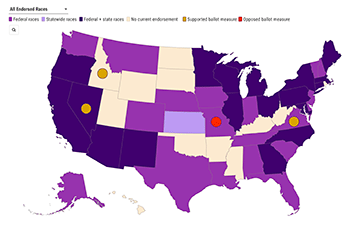
The key races we're invested in between now and November 3 to win back a reproductive freedom majority in the 2026 midterms.
Our electoral efforts connect voters with opportunities to make tangible change to help build a future where everyone is free to make their own decisions about their bodies, lives, and families.
We elect reproductive freedom champions from statehouses to the White House and protect and expand abortion rights and access through ballot measures.
Under a second Trump presidency, attacks on reproductive freedom have been relentless. But we’re tracking and fighting back against this extremist anti-abortion agenda.

Project 2025 is no longer just a “plan,” it’s a checklist of extreme policies being implemented at an alarming pace.
Mobilize your community. Hold lawmakers accountable. Organize for reproductive freedom!
Help turn values into votes by mobilizing voters and electing reproductive freedom champions up and down the ballot.
Reproductive Rights Explainers
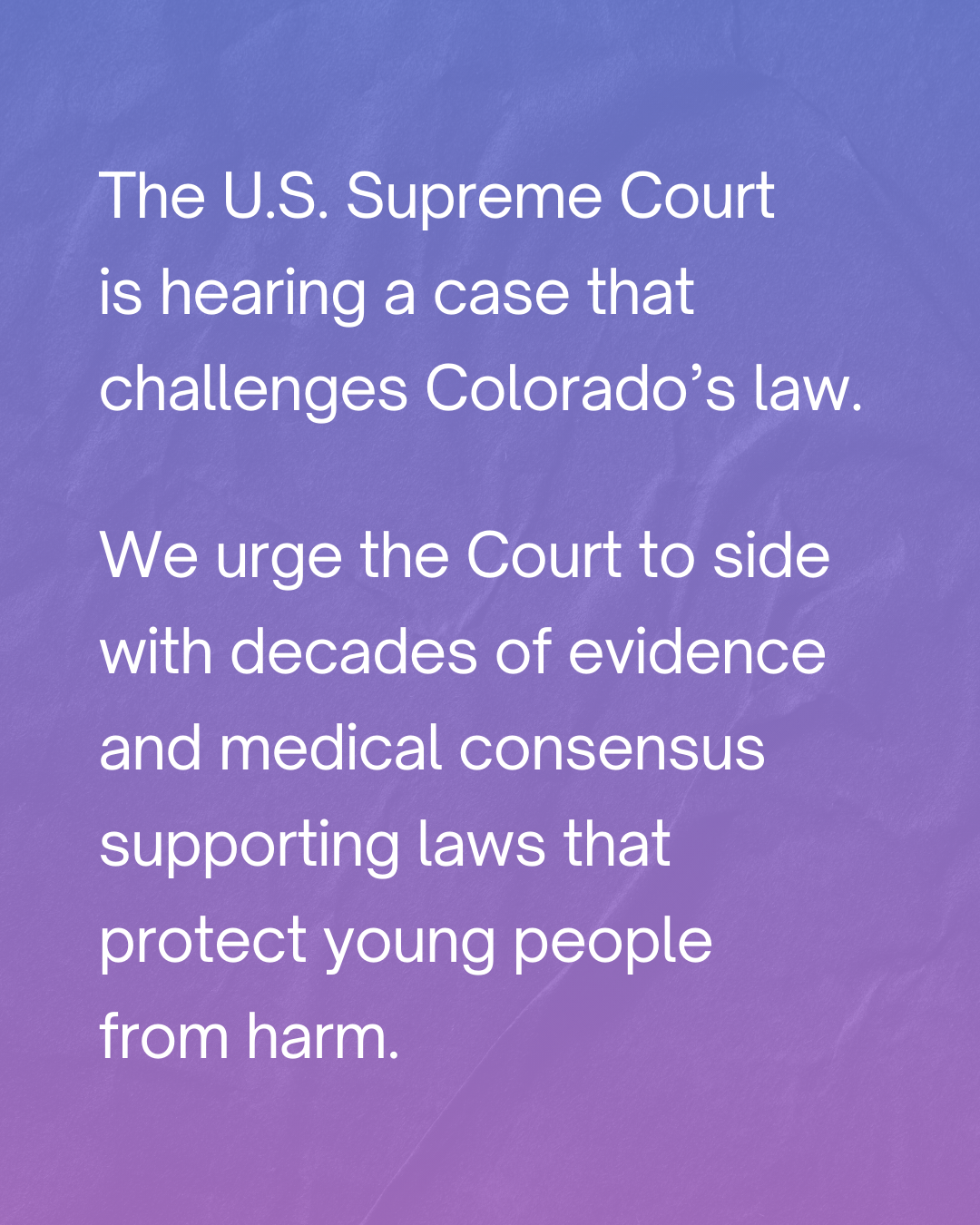
Graphic images courtesy of The Trevor Project
On October 7, 2025, the U.S. Supreme Court heard Chiles v. Salazar, the first-ever case about conversion therapy, a dangerous, discredited practice aimed at changing a person’s sexual orientation or gender identity.
The harms of conversion therapy are well-documented, and we need to protect LGBTQ+ youth from these devastating, blatantly ineffective, and unethical practices.
This case isn’t about religious freedom, free speech, or parental rights. It’s about whether states can step in when medical professionals harm their patients, especially children. It’s about protecting LGBTQ+ youth from abuse disguised as “therapy.”
Sign up for our emails to stay up to date on reproductive freedom news and ways to take action.
Chiles v. Salazar is a case challenging Colorado’s law that protects minors from being subjected to so-called “conversion therapy.”
The harms of conversion therapy are well-documented. Research shows:
The petitioner in this case is a mental health counselor in Colorado who filed a lawsuit against the state of Colorado, claiming that the law in question infringes on her freedom of speech.
Twenty-three other states—plus Washington, D.C.—have laws that protect minors from conversion therapy.
Currently, therapists are permitted to provide a space for young people to talk about sexual orientation or gender identity, but cannot ethically pressure young people toward a specific outcome.
Laws that protect young people from conversion practices have broad, bipartisan, and religious support.
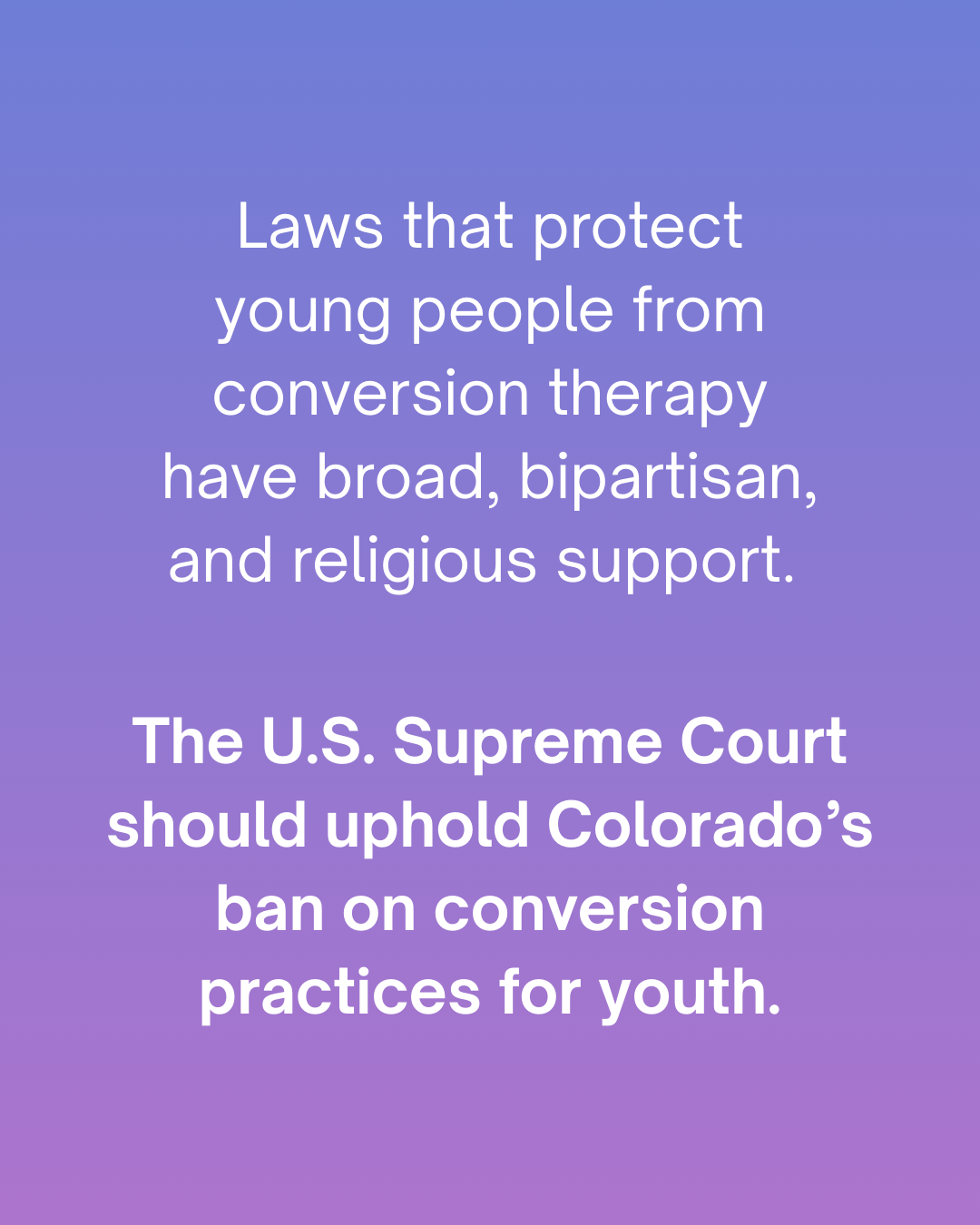
Chiles v. Salazar will shape how far states can go to protect their residents, especially kids, from dangerous pseudoscience. A strong ruling could affirm that states have the right to protect young people’s health and safety.
This case isn’t happening in isolation—it’s part of a bigger playbook. The same extremist movement pushing Project 2025 is working to roll back both LGBTQ+ rights and reproductive freedom.
A ruling against Colorado’s law would set a precedent that weakens states’ ability to protect our LGBTQ+ youth from their ability to control their own body and care.
Our freedoms are connected—reproductive freedom, LGBTQ+ rights, and the right to access safe, affirming care all depend on the same foundation: the power to decide what’s right for your own body and future.
Sign up for our emails to stay up to date on reproductive freedom news and ways to take action.

Stay in the Know
Reproductive Freedom for All is made up of members across the country who believe that everybody should be free to control their own bodies and lives—and we want you to be a part of it.
Subscribe to be one of the first to receive updates on the state of reproductive freedom and opportunities to take action.