Join Our Volunteer Elections Team
We're pulling out all the stops to ensure voters get out and vote for reproductive freedom candidates up and down the ballot, and we want you with us!
Formerly NARAL Pro-Choice America
We advocate for our right to abortion, birth control, paid parental leave, protection from pregnancy discrimination, and so much more.
We're pulling out all the stops to ensure voters get out and vote for reproductive freedom candidates up and down the ballot, and we want you with us!
Equip yourself with the facts. Here you’ll find explainers, deep dives, and other resources on reproductive freedom.
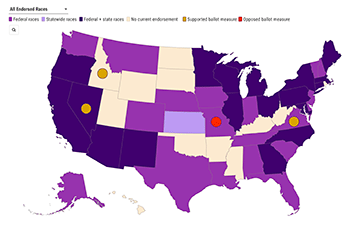
The key races we're invested in between now and November 3 to win back a reproductive freedom majority in the 2026 midterms.
Our electoral efforts connect voters with opportunities to make tangible change to help build a future where everyone is free to make their own decisions about their bodies, lives, and families.
We elect reproductive freedom champions from statehouses to the White House and protect and expand abortion rights and access through ballot measures.
Under a second Trump presidency, attacks on reproductive freedom have been relentless. But we’re tracking and fighting back against this extremist anti-abortion agenda.

Project 2025 is no longer just a “plan,” it’s a checklist of extreme policies being implemented at an alarming pace.
Mobilize your community. Hold lawmakers accountable. Organize for reproductive freedom!
Help turn values into votes by mobilizing voters and electing reproductive freedom champions up and down the ballot.
Memos & Media Guidance
TO: Interested Parties
FROM: Reproductive Freedom for All
RE: MEMO: Reproductive Freedom for All Celebrates AANHPI Heritage Month
DATE: May 1, 2026
MEMO: Reproductive Freedom for All Celebrates AANHPI Heritage Month
Asian American, Native Hawaiian, and Pacific Islander Heritage Month is a moment to celebrate the diversity and increasing political power of AANHPI communities across the country. AANHPI communities are among the fastest-growing in the United States, and they are an increasingly decisive force in elections—including the battleground states that will determine control of Congress in 2026.
Reproductive Freedom for All is led by Mini Timmaraju, the first Indian American woman to serve as President and CEO of one of the nation’s largest organizations fighting to elect reproductive freedom champions and hold anti-abortion politicians accountable. We proudly work alongside our allies at the National Asian Pacific American Women’s Forum (NAPAWF) in this fight. Their latest research is included below.
AANHPI Communities Support Abortion Access By Wide Margins
AANHPI communities overwhelmingly believe decisions about pregnancy belong to people, not to the government. Nearly two-thirds believe abortion should be legal, and 84 percent agree that people should make their own abortion decisions free from government interference—a conviction that holds across ethnic subgroups, immigration histories, and political identities. By a margin of more than three to one, AANHPI communities prefer a nationwide right to abortion over leaving those decisions to individual states. Just four percent describe abortion as a political issue.
AANHPI communities have made it clear they will show up for reproductive freedom at the polls come November. Nearly six in ten say they would vote based on a candidate’s position on abortion in federal, state, and local races, and more than half say they would sign a petition or talk with family and friends. They are taking action to take our country back from elected officials who have focused on stoking existing inequities.
Abortion Bans Compound Existing Inequities
AANHPI communities were already contending with a healthcare system that was failing them before the Dobbs decision and Trump’s abortion bans. Language access, immigration barriers, cultural stigma, and provider shortages in underserved communities all factor into whether someone can access care, including abortion care. The Trump administration is deepening healthcare deserts, as Medicaid cuts drive hospital closures and eliminate obstetric units in communities that have no alternatives.
Escalating, violent immigration enforcement has also increased fear of seeking medical care, amplified by fear of abortion criminalization. Sixty-four percent of AANHPI community members believe it is likely that someone could be detained or deported by ICE for seeking abortion care. That fear keeps people from getting the care they need, and worsens the maternal health crisis in this country.
Throughout AANHPI Heritage Month, we reckon with the barriers that have long shaped who gets care and who gets a seat at the table. But first and foremost, it is a month to celebrate the contributions, rich history, and culture that AANHPI communities have woven into the fabric of this country—and to recommit to making sure those communities can access the reproductive freedom they deserve and are fighting for.
###
For over 55 years, Reproductive Freedom for All (formerly NARAL Pro-Choice America) has fought to protect and advance reproductive freedom at the federal and state levels—including access to abortion care, birth control, pregnancy and post-partum care, and paid family leave—for everybody. Reproductive Freedom for All is powered by its more than 4 million members from every state and congressional district in the country, representing the 8 in 10 Americans who support legal abortion.
Press Release National