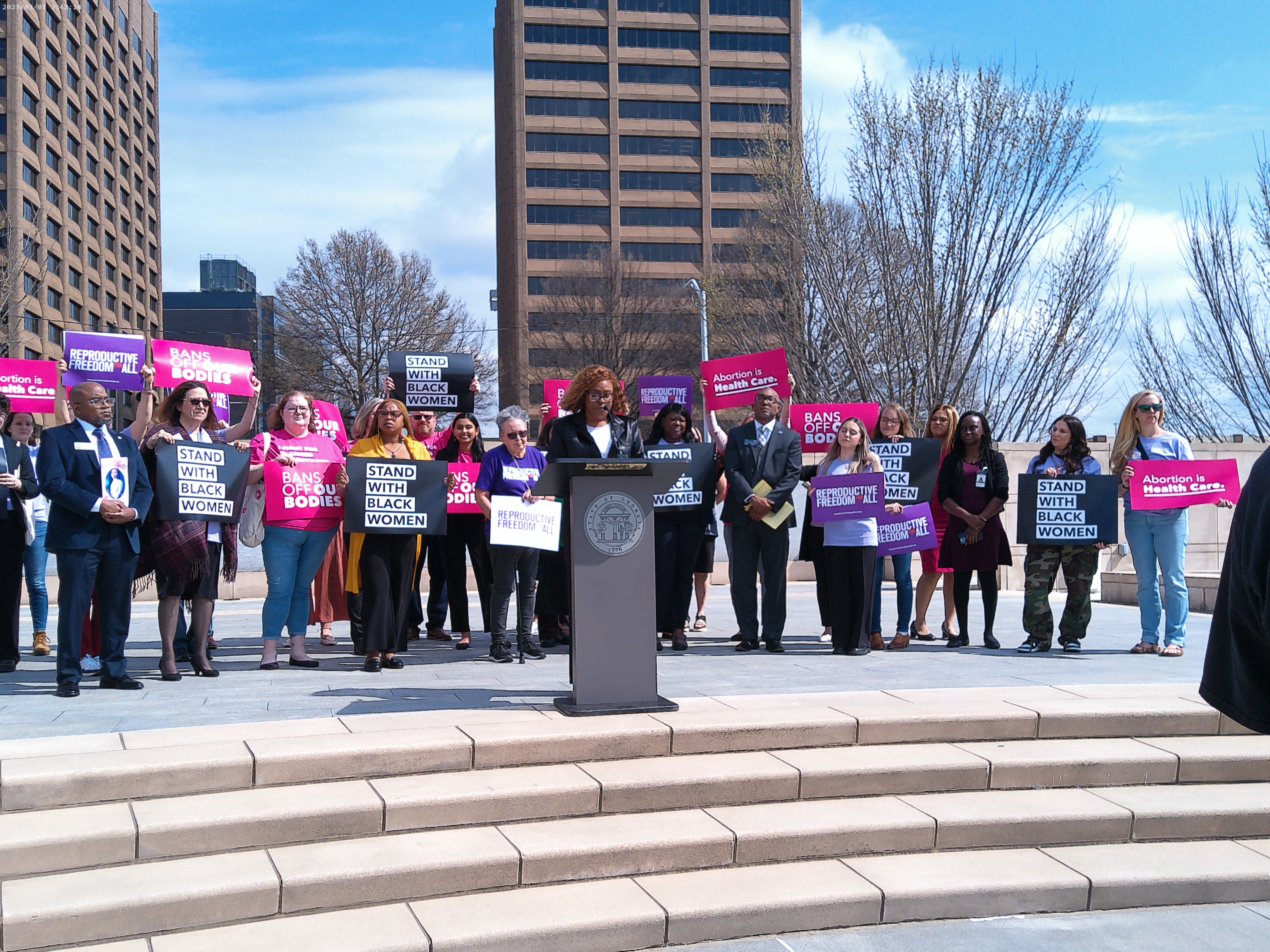
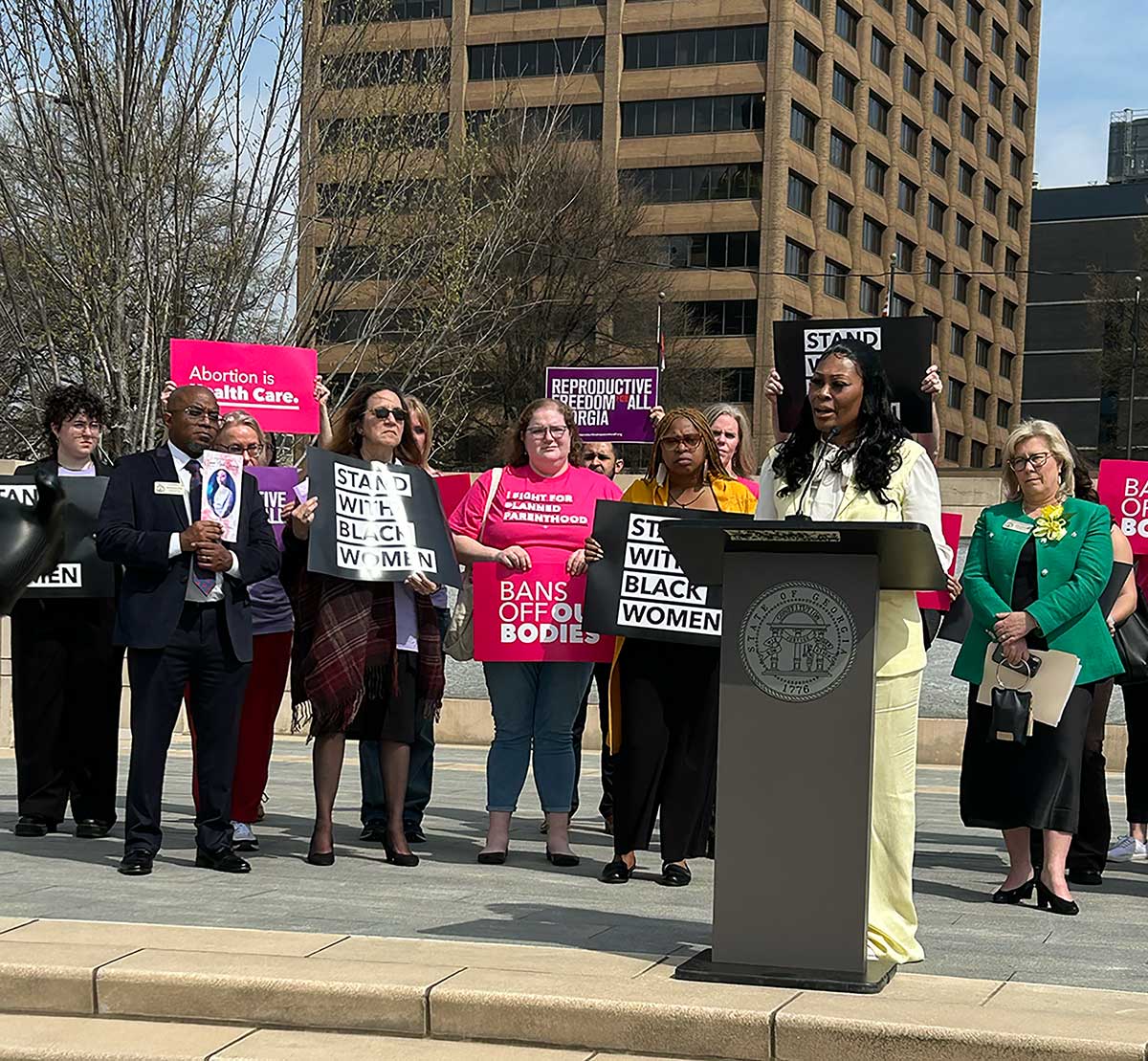
Georgians are suffering due to restrictive abortion bans, forced to navigate dangerous restrictions that endanger their lives and well-being. Black women, who already face higher maternal mortality rates, are disproportionately harmed by these abortion bans. This is unacceptable—let's make a change, together.
Since July 20, 2022, Georgia law criminalizes abortion providers. A study from RISE estimates that Georgia’s abortion ban likely blocks nearly 90% of abortions in the state.
Georgia’s reproductive health landscape is marked by high maternal mortality, provider shortages, restricted insurance access, and systemic inequities.
Those most affected include women, Black, Indigenous, and other people of color, low-income, LGBTQ+ people, immigrants, young people, rural communities, and people with disabilities.
Impacts on Georgians’ Abortion Access Because of Bans
Increased burdens: Travel requires time off work, childcare, transportation, and additional expenses, limiting access further.
Barriers to care for people facing pregnancy emergencies, fetal anomalies, or sexual assault who often must travel out of state because hospitals and providers fear legal consequences, even when exceptions appear to apply.
Dangerous Delays in Care for Pregnant Patients in Georgia
“Exceptions often resulted in further harms to the well-being of the pregnant person and of providers.”
Georgia law includes narrow exceptions when a pregnant person’s life or health is at risk.
In practice, these exceptions do not guarantee timely care because legal penalties for providers are severe and guidance is unclear. Clinicians often delay care while seeking legal review, putting patients at additional risk.
Mandatory state counseling often includes medically inaccurate or misleading information.
Georgia’s mandatory 24-hour waiting period between the first visit and abortion increases travel and financial burdens.
Young people must provide parental notice, and while judicial bypass exists, it is complex and difficult to navigate without legal support.
A recent study by Amplify Georgia Collaborative and Center for Reproductive Health Research in the Southeast (RISE) found that Georgia’s current law does not ensure access to essential medical care for those experiencing pregnancy loss, sexual assault, or emergency situations in pregnancy; and that the specified exceptions actually resulted in further harm to patients and providers
Georgia’s Maternal Mortality
Georgia’s maternal mortality rate is 2X higher than the national average
Pregnancy-related deaths are preventable in many cases, but delayed or inaccessible care contributes significantly to these outcomes. Rural areas face particular challenges due to limited health care infrastructure.
Despite Georgia’s grim maternal mortality rate, its committee in charge of investigating the deaths of pregnant women has been reshaped in ways that raise serious concerns.
No recent report: Georgia has not released a public report since 2023 (covering 2020–2022), limiting insight into how the state’s abortion ban contributes to maternal mortality and allowing anti-abortion legislators and elected officials to avoid accountability.
Many pregnant people must travel long distances for prenatal care, labor and delivery, or emergency pregnancy care. These shortages contribute to inequities in care and poor maternal outcomes, with rural communities disproportionately affected.
82 of 159 counties have no OB-GYN physician.
65 counties have no pediatrician.
Large portions of the state are designated Primary Care Health Professional Shortage Areas.
As of 2020, 95% of counties had no abortion clinic, affecting 55% of women even before the abortion ban.
The State of Health Insurance & Coverage in Georgia
Nearly 20% of reproductive-age women in Georgia are uninsured, one of the highest rates in the country.
Refusal to expand Medicaid under the Affordable Care Act has left more than 400,000 Georgians without health insurance and contributes to the state’s high uninsured rate.
Georgia Medicaid covers abortion only when the pregnant person’s life is at risk or in cases of rape or incest.
ACA marketplace plans may cover abortion care only in extremely limited circumstances, further restricting access.
Funding So-Called “Crisis Pregnancy Centers” (Anti-Abortion Clinics) in Georgia
$20 million taxpayer dollars has funded anti-abortion clinics
Georgia has 85+ anti-abortion centers (AACs)—also called “crisis pregnancy centers”—fake health care clinics that provide virtually no medical care and often give misleading or false information.
State-funded anti-abortion centers are even more harmful than privately funded centers, as they receive taxpayer dollars yet still do not provide abortion care or follow national medical standards.
Since the program’s creation in 2016, Georgia has allocated roughly $2 million annually, totaling close to $20 million in taxpayer funding over the last 10 years, to these centers.