Join Our Volunteer Elections Team
We're pulling out all the stops to ensure voters get out and vote for reproductive freedom candidates up and down the ballot, and we want you with us!
Formerly NARAL Pro-Choice America
We advocate for our right to abortion, birth control, paid parental leave, protection from pregnancy discrimination, and so much more.
We're pulling out all the stops to ensure voters get out and vote for reproductive freedom candidates up and down the ballot, and we want you with us!
Equip yourself with the facts. Here you’ll find explainers, deep dives, and other resources on reproductive freedom.
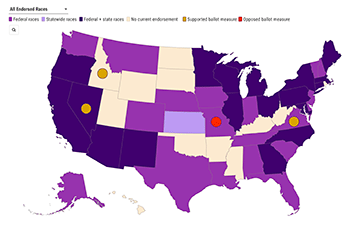
The key races we're invested in between now and November 3 to win back a reproductive freedom majority in the 2026 midterms.
Our electoral efforts connect voters with opportunities to make tangible change to help build a future where everyone is free to make their own decisions about their bodies, lives, and families.
We elect reproductive freedom champions from statehouses to the White House and protect and expand abortion rights and access through ballot measures.
Under a second Trump presidency, attacks on reproductive freedom have been relentless. But we’re tracking and fighting back against this extremist anti-abortion agenda.
Project 2025 is no longer just a “plan,” it’s a checklist of extreme policies being implemented at an alarming pace.
Mobilize your community. Hold lawmakers accountable. Organize for reproductive freedom!
Help turn values into votes by mobilizing voters and electing reproductive freedom champions up and down the ballot.
Reproductive Rights Explainers
This ruling weakens a core civil rights law and makes it harder to stop discrimination in voting.
For decades, the Voting Rights Act of 1965 has been one of our nation’s core civil rights protections. It has safeguarded fair representation and blocked racial gerrymandering.
Louisiana v. Callais changes how courts review claims of discrimination in voting maps.
At the center of the ruling is Section 2, which lets voters challenge maps that weaken the voting power of communities of color. That protection is now much weaker.
In its 6-3 ruling, led by Samuel Alito, the Court struck down Louisiana’s map that created a second majority-Black district.
The bottom line: one of the strongest tools for fair voting maps has been gutted.
The ruling clears the way for states to redraw maps that weaken fair representation ahead of the 2026 midterms.
What this means:
The result: a new wave of gerrymandering that lets politicians rig the system to stay in power.
This ruling weakens a core civil rights law and makes it harder to stop discrimination in voting.
By allowing partisan intent as a defense, the Court gives states the greenlight to create maps that harm voters of color—with fewer legal consequences.
Who is most impacted:
When our voting rights are restricted, so is our bodily autonomy.
This decision also shows a deeply troubling pattern: the Supreme Court is weakening the people’s political power.
Republicans and anti-abortion extremists know their agenda is deeply unpopular. Instead of persuading voters, they are working to silence them—through voter suppression, extreme gerrymandering, and now by dismantling the Voting Rights Act.
The Supreme Court has played a central role in this extremist power grab. Justices Alito, Roberts, and Thomas have been trying to gut the Voting Rights Act for decades, similar to their explicit efforts to overturn Roe v. Wade— Trump’s extreme appointees to the Court made both decisions possible.
When lawmakers cannot win on issues, they change the rules of the game. The best way for us to respond is through court reform.
It includes:
Deep Dives Reproductive Rights
Profiles Reproductive Rights
Profiles Reproductive Rights