
Protect Medication Abortion
Add your name in support of access to the safe and effective medication used in 63% of all abortion care nationwide.
Formerly NARAL Pro-Choice America

We advocate for our right to abortion, birth control, paid parental leave, protection from pregnancy discrimination, and so much more.
Add your name in support of access to the safe and effective medication used in 63% of all abortion care nationwide.
Equip yourself with the facts. Here you’ll find explainers, deep dives, and other resources on reproductive freedom.

Pollster Molly Murphy breaks down the blue tsunami on My Body. My Pod. with Mini Timmaraju.
Our electoral efforts connect voters with opportunities to make tangible change to help build a future where everyone is free to make their own decisions about their bodies, lives, and families.
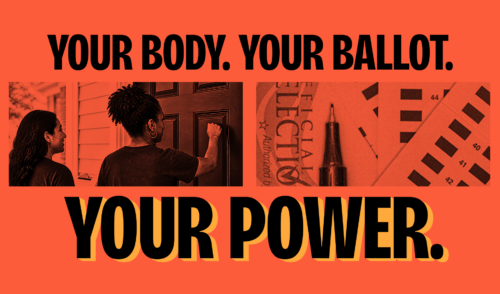
We elect reproductive freedom champions from statehouses to the White House and protect and expand abortion rights and access through ballot measures.
Under a second Trump presidency, attacks on reproductive freedom have been relentless. But we’re tracking and fighting back against this extremist anti-abortion agenda.

Project 2025 is no longer just a “plan,” it’s a checklist of extreme policies being implemented at an alarming pace.
Mobilize your community. Hold lawmakers accountable. Organize for reproductive freedom!
There are so many ways to get involved, both in person and virtually. Sign up today to get started.
Memos & Media Guidance
TO: Interested Parties
FROM: Reproductive Freedom for All
DATE: Friday, November 13, 2026
MEMO: Voters Delivered a Mandate on Abortion, Now Lawmakers Must Deliver
The election has changed what is possible for abortion policy. Voters elected candidates who ran on reproductive freedom and rejected efforts to take abortion rights away. New Democratic trifectas in states across the country create opportunities to repeal harmful restrictions, strengthen protections, and make care more accessible.
The mandate sent by voters to advance reproductive freedom spans nationwide, increasing pressure on Republicans to work with new majorities to expand access—and raising the political cost of standing in the way.
States: Put New Governing Power to Work
Nearly 24 million women live in states with new reproductive freedom trifectas, where lawmakers can now advance stronger protections and better access to care. Leaders are already signaling their intent: Pennsylvania Gov. Josh Shapiro celebrated the state’s new Democratic trifecta by naming expanding reproductive freedom among his priorities.
In Wisconsin, Pennsylvania, Michigan, Arizona, Minnesota, and Nevada, the opportunities include:
Democratic gains also create opportunities where full governing control remains divided:
Congress: Turn New Majorities Into Action
While a potential presidential veto will shape what becomes law, new Democratic majorities in Congress have power to move legislation, negotiate funding, and demand votes. They should use every opportunity to secure progress—and require opponents to answer for blocking it. Priorities include:
The Bottom Line: The historic victories secured on Election Day must translate into tangible action to protect lives, lower costs, and restore fundamental freedoms. The measure of this election’s impact will be what changes for people seeking care: fewer restrictions, stronger protections, and more affordable access. Voters delivered an unmistakable mandate for candidates up and down the ballot to prioritize abortion rights and access — we have no time to waste to start transforming the landscape of reproductive freedom.
ICYMI National