Join Our Volunteer Elections Team
We're pulling out all the stops to ensure voters get out and vote for reproductive freedom candidates up and down the ballot, and we want you with us!
Formerly NARAL Pro-Choice America
We advocate for our right to abortion, birth control, paid parental leave, protection from pregnancy discrimination, and so much more.
We're pulling out all the stops to ensure voters get out and vote for reproductive freedom candidates up and down the ballot, and we want you with us!
Equip yourself with the facts. Here you’ll find explainers, deep dives, and other resources on reproductive freedom.
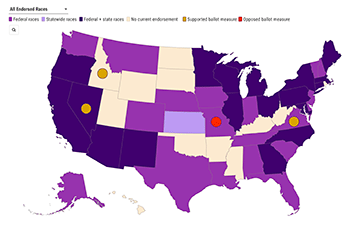
The key races we're invested in between now and November 3 to win back a reproductive freedom majority in the 2026 midterms.
Our electoral efforts connect voters with opportunities to make tangible change to help build a future where everyone is free to make their own decisions about their bodies, lives, and families.
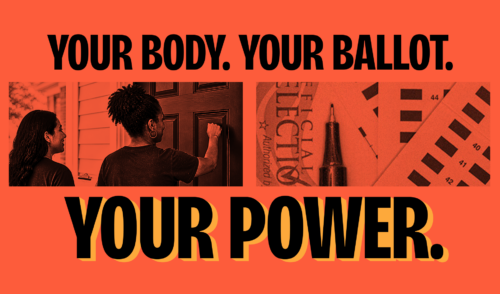
We elect reproductive freedom champions from statehouses to the White House and protect and expand abortion rights and access through ballot measures.
Under a second Trump presidency, attacks on reproductive freedom have been relentless. But we’re tracking and fighting back against this extremist anti-abortion agenda.

Project 2025 is no longer just a “plan,” it’s a checklist of extreme policies being implemented at an alarming pace.
Mobilize your community. Hold lawmakers accountable. Organize for reproductive freedom!
Help turn values into votes by mobilizing voters and electing reproductive freedom champions up and down the ballot.
Reproductive Rights Podcast
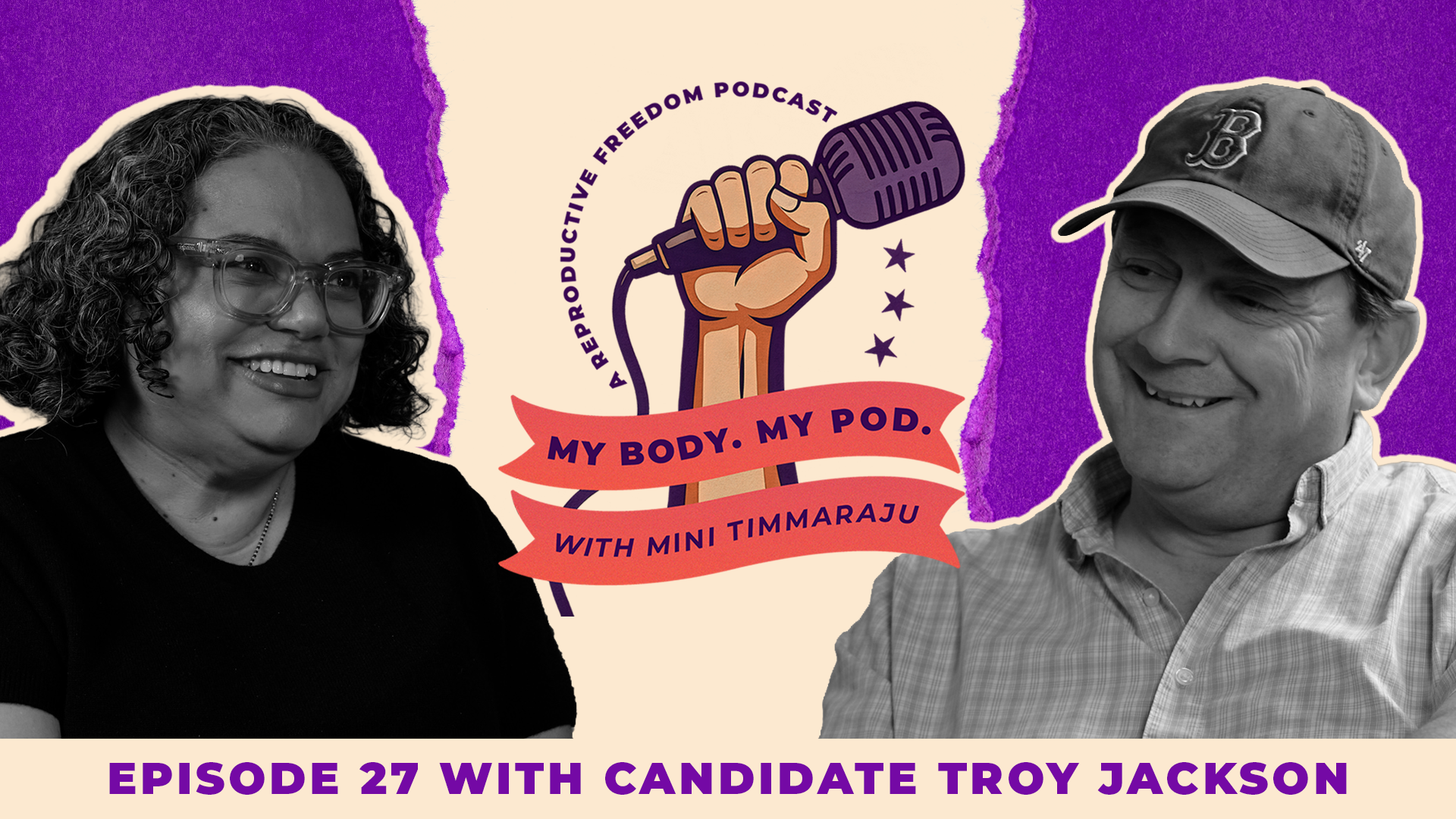
Troy Jackson once opposed abortion rights. Then he listened, changed his mind, and went on to help pass some of the strongest reproductive freedom protections in the country.
Troy Jackson joins Mini Timmaraju in the latest episode of My Body. My Pod. to talk about his journey from opposing abortion rights to becoming one of Maine’s strongest reproductive freedom champions.
What changed his mind? What did he do once he realized he was wrong? And what can his story teach us about how we actually change hearts, minds, and laws?
They also talk about why abortion and affordability are deeply connected, what it means to fight for working people, and why the race between Troy Jackson and Susan Collins is a BFD for reproductive freedom in 2026.
Troy Jackson didn’t always support abortion rights.
He grew up in a Catholic community in northern Maine, and when he first entered the legislature, he voted for abortion restrictions.
So what changed?
People talked to him. Women. Doctors. People in his community who helped him understand what these laws actually meant for their lives and their health.
And Troy listened.
“I just started to understand that I was wrong on this issue,” he tells Mini.
But changing his mind was only the beginning.
As president of the Maine Senate, Troy helped pass some of the strongest reproductive freedom protections in the country. He fought to expand access to abortion and contraception and make sure low-income Mainers could actually get the care those rights promised.
And when he heard from women who had been forced to leave Maine during devastating pregnancies to get the care they needed?
He listened again. He apologized that Maine’s laws had failed them. And then he went back to work to change those laws.
That’s what makes Troy’s story so powerful. People can listen. People can learn. People can change. And when our elected leaders do, they have a responsibility to act.
For Troy, the answer is pretty simple.
Politicians shouldn’t be making decisions that belong to patients and their doctors.
He knows that in a particularly personal way. Troy spent his life working in the Maine woods—not medicine.
“I’m a logger,” he tells Mini. “I shouldn’t be deciding somebody’s healthcare.”
Neither should any other politician.
Reproductive freedom isn’t separate from the economic issues families are worried about every day.
It’s part of them.
Healthcare. Child care. Housing. Food. Diapers. The basic cost of raising a family.
Troy talks with Mini about why deciding if and when to have a child can’t be separated from whether someone can afford to care for themselves and their family.
For a guy who got into politics because he thought working people were getting a raw deal, that connection matters.
Because reproductive freedom isn’t just about whether you have a right on paper. It’s about whether you actually have the freedom and resources to make decisions about your own life.
Long before Troy Jackson was president of the Maine Senate, he was a logger in northern Maine watching powerful interests make decisions that hurt working people.
So he and other loggers did something about it: they organized and blocked the Canadian border for a week.
That fight eventually brought Troy into politics.
And all these years later, he still sees the same basic fight everywhere: a small number of powerful people with enormous money and influence versus a whole lot of regular people who can have power when they stand together.
“There’s more of us than there are of them,” Troy tells Mini.
That’s true in the fight for working people. It’s true in the fight for reproductive freedom. And it’s true at the ballot box.
And then there’s Susan Collins.
Troy is running for the U.S. Senate in Maine, where voters will have a choice between two very different records on reproductive freedom.
Collins voted to confirm Brett Kavanaugh to the Supreme Court. Kavanaugh later joined the majority that overturned Roe v. Wade. Now, she says she doesn’t even regret her vote.
Troy once held the wrong position on abortion. He says so. He listened to the people affected by those policies, changed his mind, and then used his power to expand reproductive freedom in Maine.
That contrast matters.
And it’s one reason Maine is a BFD in 2026.
The 2026 midterm elections will help determine who has the power to protect reproductive freedom in Congress—and Maine is one of the states to watch.
There are plenty of ways to get involved, whether you want to knock doors, make calls, send texts, share information online, or talk to the people in your life.
Your state lawmakers have the power to pass legislation that will shape our daily lives. Let them know you support reproductive freedom, and you're paying attention.
We're pulling out all the stops to ensure voters get out and vote for reproductive freedom candidates up and down the ballot, and we need your help to make it happen!
Help get out the vote in 2026! Help spread the word and encourage your friends, family, and community to make a plan to vote for reproductive freedom.
MY BODY. MY POD. WITH MINI TIMMARAJU.
That’s why we’re bringing you My Body. My Pod. with Mini Timmaraju, a reproductive freedom podcast.
If you’re into building a nationwide movement to protect and expand health justice, reproductive equity, and the power of people to control their own lives, this show is for you.
Hear from leaders and changemakers who share wisdom from the front lines, stories of the real struggles people are facing every day, and a vision for the future we’re determined to win.
Hosted by Mini Timmaraju, President and CEO of Reproductive Freedom for All. Available on YouTube and wherever you get your podcasts.

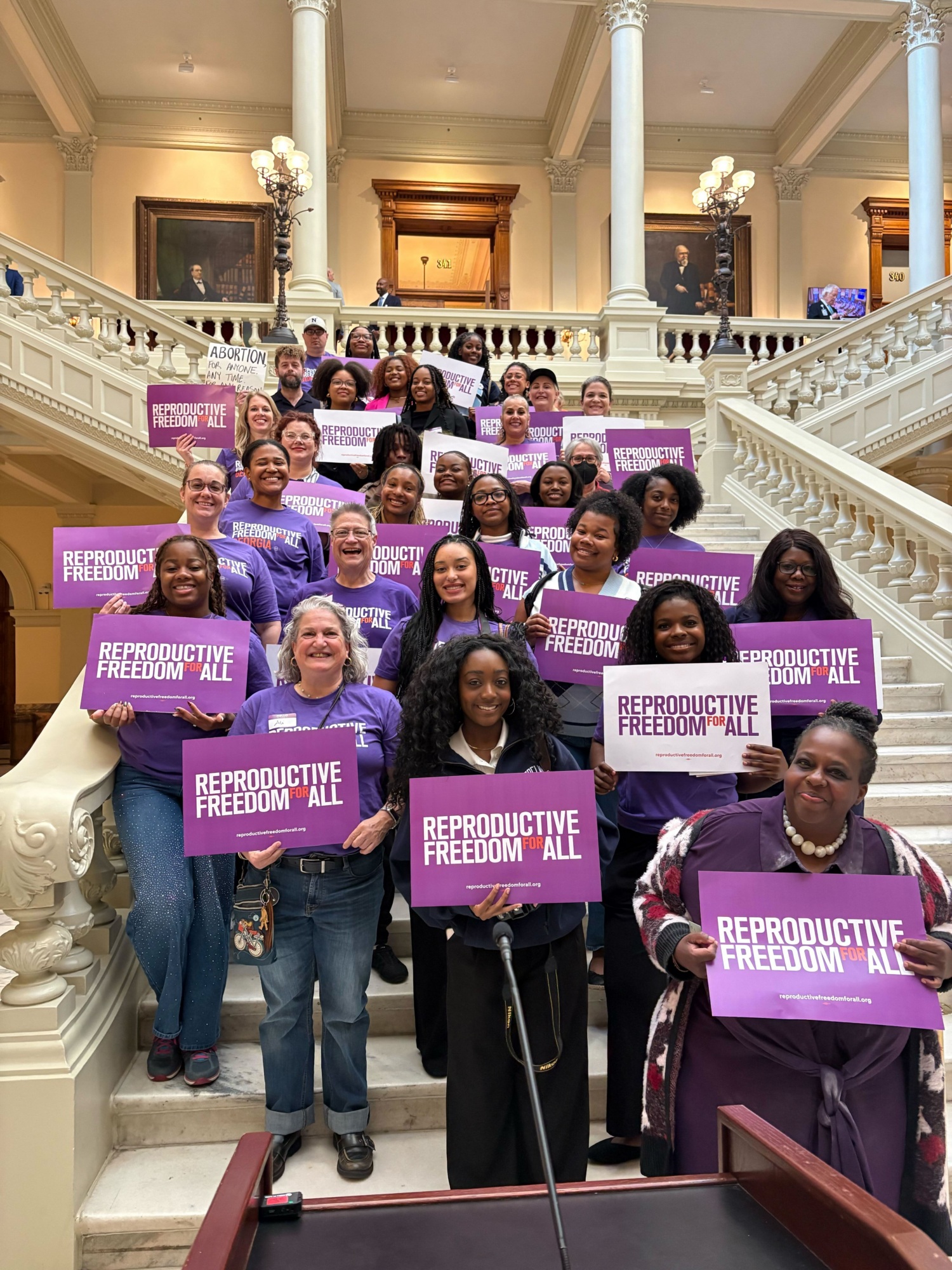
Stay in the Know
Reproductive Freedom for All is made up of members across the country who believe that everybody should be free to control their own bodies and lives—and we want you to be a part of it.
Subscribe to be one of the first to receive updates on the state of reproductive freedom and opportunities to take action.
Podcast Reproductive Rights
Podcast Reproductive Rights
Podcast Reproductive Rights