
Join Our Volunteer Elections Team
We're pulling out all the stops to ensure voters get out and vote for reproductive freedom candidates up and down the ballot, and we want you with us!
Formerly NARAL Pro-Choice America
We advocate for our right to abortion, birth control, paid parental leave, protection from pregnancy discrimination, and so much more.
We're pulling out all the stops to ensure voters get out and vote for reproductive freedom candidates up and down the ballot, and we want you with us!
Equip yourself with the facts. Here you’ll find explainers, deep dives, and other resources on reproductive freedom.
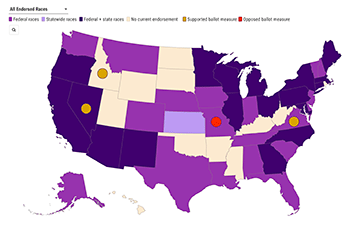
The key races we're invested in between now and November 3 to win back a reproductive freedom majority in the 2026 midterms.
Our electoral efforts connect voters with opportunities to make tangible change to help build a future where everyone is free to make their own decisions about their bodies, lives, and families.
We elect reproductive freedom champions from statehouses to the White House and protect and expand abortion rights and access through ballot measures.
Under a second Trump presidency, attacks on reproductive freedom have been relentless. But we’re tracking and fighting back against this extremist anti-abortion agenda.

Project 2025 is no longer just a “plan,” it’s a checklist of extreme policies being implemented at an alarming pace.
Mobilize your community. Hold lawmakers accountable. Organize for reproductive freedom!
Help turn values into votes by mobilizing voters and electing reproductive freedom champions up and down the ballot.
Activism 101 Explainers
For decades, the anti-abortion movement has used federal insurance coverage bans to restrict access without banning abortion outright.
Tell Congress to support the EACH Act which would end the Hyde Amendment and other existing abortion coverage bans.
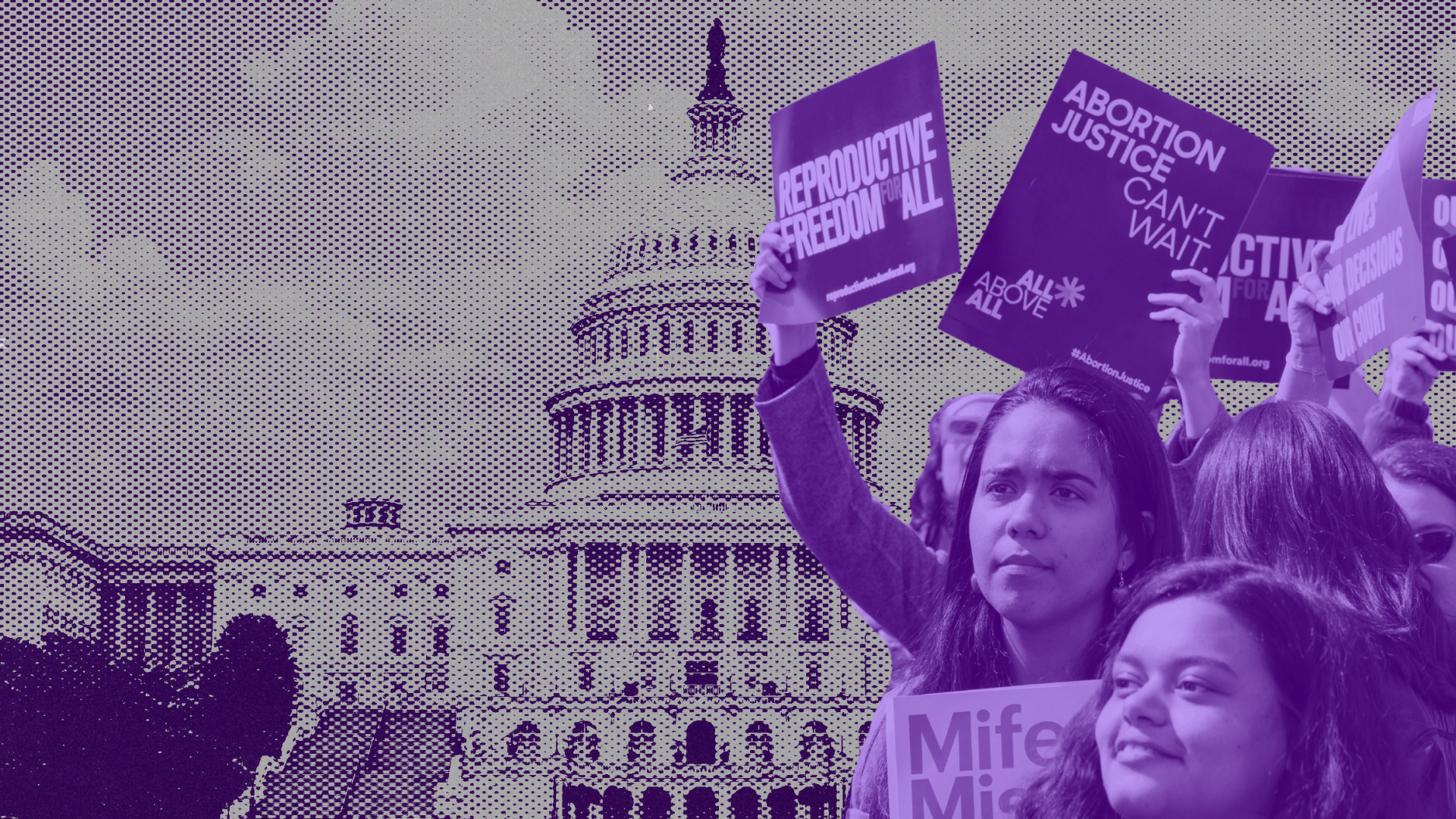
Even before the Supreme Court overturned Roe v. Wade, abortion access was never equitable. For decades, the Hyde Amendment and other coverage restrictions have put care out of reach for people who cannot afford to pay out of pocket. Those barriers remain today.
The Hyde Amendment blocks federal funds from covering abortion care in most circumstances. It allows limited exceptions when a pregnancy results from rape or incest or endangers the pregnant person’s life. But as we have seen, exceptions to abortion bans and abortion coverage bans simply do not work in practice.
Congress first approved Hyde in 1976, and it took effect in 1977. It is not a permanent law. Instead, Congress has added it to federal spending legislation every year for nearly five decades.
That means Hyde is not an unavoidable part of our healthcare system. It is a political choice that members of Congress continue to make.
Hyde does not ban abortion itself. It blocks federal funds from paying for it.
That may sound like a technical difference. But for someone who cannot afford hundreds or thousands of dollars out of pocket, insurance coverage can determine whether they can get care at all.
Medicaid should help people afford the medical care they need. Hyde singles out abortion and denies coverage based on the type of care someone seeks.
Congress has added similar Hyde-like abortion coverage bans to other programs that provide health insurance or care, impacting:
Together, these policies make abortion coverage depend on where someone works, how much money they earn, and how they receive healthcare.
The largest group of people affected by Hyde are those enrolled in Medicaid—the health insurance program that covers nearly 70 million people including individuals, young people, families with low incomes, and people with disabilities.
Medicaid is a lifeline for millions of people—especially women of reproductive age. It funds nearly half of all births, covers essential care like birth control and prenatal visits, and helps people access care before, during, and after pregnancy. In 2025, Trump and Republican lawmakers gutted Medicaid coverage, threatening care for millions of Americans.
Hyde creates even more barriers for some communities
Systemic racism and economic inequality shape who is more likely to rely on Medicaid coverage.
As a result, Hyde and other coverage bans disproportionately harm:
For someone with financial resources, a coverage restriction may be an expensive obstacle. For someone without those resources, such restrictions can make it impossible to access care.
Abortion coverage also depends on where you live
States may use their own money to provide broader Medicaid coverage for abortion care, but many do not. As of July 2026, 21 states currently use their own funds to cover abortion services for Medicaid enrollees beyond the limits imposed by the federal Hyde Amendment.
One bright spot is that in some states, legislators have championed innovative ways to create additional abortion funding for uninsured and underinsured patients.
For example, Maryland enacted a funding model in 2025 that helps support patients who are uninsured, underinsured, or cannot use their insurance due to domestic violence or other safety concerns, and patients traveling to the state for care.
Call to action: Tell your state lawmakers that reproductive freedom matters!
Without insurance coverage, patients must pay for abortion care out of pocket. The cost varies based on the type of care, location, provider, and stage of pregnancy.
For many families, any amount can be out of reach. Research has found that 43% of women ages 18 to 49 could not cover a $500 emergency expense using their savings.
And the procedure is not always the only expense. A person may also need to pay for:
Coverage bans are part of the larger anti-abortion strategy. Hyde shows us that long before Roe fell, anti-abortion extremists had already found ways to put abortion out of reach without banning it outright. Now, they are stacking those longstanding barriers with new attacks.
Anti-abortion lawmakers are passing state abortion bans, attacking medication abortion, interfering with emergency care, targeting providers, threatening health care coverage, and weaponizing the courts to restrict our freedoms.
We cannot protect reproductive freedom by focusing only on whether abortion is legal. We must also fight for care that people can actually find, afford, and receive.
Freedom means being able to make decisions about your body, your family, and your future, regardless of your income, insurance, or ZIP code.
Legal does not always mean accessible. Without meaningful access, there is no reproductive freedom.
For nearly five decades, politicians have used the Hyde Amendment and similar restrictions to deny abortion coverage to people who receive health care through the federal government.
The Equal Access to Abortion Coverage in Health Insurance Act, or EACH Act, would end the Hyde Amendment and other federal abortion coverage restrictions.
The bill would:
The EACH Act would help ensure that a person’s income or source of insurance does not stand between them and the care they need.
Ending Hyde will not remove every barrier to abortion care. But it is a necessary step toward a future where reproductive freedom is real for everyone, not only those who can afford it.
Urge your U.S. Representatives and Senators to cosponsor the Equal Access to Abortion Coverage in Health Insurance (EACH) Act.
Your state lawmakers have the power to pass legislation that will shape our daily lives. Let them know you support reproductive freedom, and you're paying attention.
Send a message now to tell your U.S. Senators and Representative that reproductive freedom is a top priority for you—and that you're part of a nationwide movement that votes.
Deep Dives Activism 101
Repro Download Activism 101
Deep Dives Activism 101