
Join Our Volunteer Elections Team
We're pulling out all the stops to ensure voters get out and vote for reproductive freedom candidates up and down the ballot, and we want you with us!
Formerly NARAL Pro-Choice America

We advocate for our right to abortion, birth control, paid parental leave, protection from pregnancy discrimination, and so much more.
We're pulling out all the stops to ensure voters get out and vote for reproductive freedom candidates up and down the ballot, and we want you with us!
Equip yourself with the facts. Here you’ll find explainers, deep dives, and other resources on reproductive freedom.
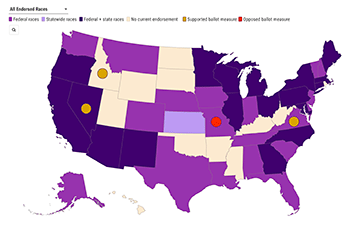
The key races we're invested in between now and November 3 to win back a reproductive freedom majority in the 2026 midterms.
Our electoral efforts connect voters with opportunities to make tangible change to help build a future where everyone is free to make their own decisions about their bodies, lives, and families.
We elect reproductive freedom champions from statehouses to the White House and protect and expand abortion rights and access through ballot measures.
Under a second Trump presidency, attacks on reproductive freedom have been relentless. But we’re tracking and fighting back against this extremist anti-abortion agenda.

Project 2025 is no longer just a “plan,” it’s a checklist of extreme policies being implemented at an alarming pace.
Mobilize your community. Hold lawmakers accountable. Organize for reproductive freedom!
Help turn values into votes by mobilizing voters and electing reproductive freedom champions up and down the ballot.
Memos & Media Guidance
TO: Interested Parties
FROM: Reproductive Freedom for All
RE: Democrats Ran on Reproductive Freedom—and Won
DATE: November 4, 2026
The 2026 midterms are making history, and Democrats who put reproductive freedom front and center in their campaigns shattered expectations and clinched new majorities in the U.S. House and Senate. From Maine to Texas to Georgia to Pennsylvania, winning candidates up and down the ballot made abortion access central to their case, connecting the freedom to make personal healthcare decisions to voters’ concerns about their families, finances, and futures. The results so far show why reproductive freedom belongs at the center of winning campaigns as we enter the 2028 cycle.
Our $23.5 million My Body. My Ballot. campaign helped put these stakes before voters through paid communications, organizing, and direct voter contact. These candidates ran on reproductive freedom and won. Now they must deliver by protecting access to care and opposing further efforts to ban abortion.
Senate
Maine: Troy Jackson defeated Susan Collins by holding her accountable for helping overturn Roe, toppling a five-term incumbent.As the first reproductive rights advocacy group to endorse Troy Jackson, Reproductive Freedom for All backed his leadership and made defeating Susan Collins a priority. We paired that early endorsement with nearly half a million dollars in direct-mail investment and sustained engagement on the ground to put reproductive freedom at the center of the race. Our President and CEO, Mini Timmaraju, joined Jackson from the launch of his campaign through the final stretch, stumping with him the day before the election. Our work reinforced a central contrast: Jackson’s record of expanding reproductive freedom versus Collins’ vote to confirm Brett Kavanaugh, who helped overturn Roe. Jackson carried that contrast across his campaign, into his advertising and onto the debate stage, challenging Collins to answer for her vote. Reproductive Freedom for All helped turn accountability for the loss of abortion rights into a defining issue in the race—and helped elect a reproductive freedom champion.
New Hampshire: Chris Pappas put John Sununu’s anti-abortion record before voters.Pappas made sure voters understood Sununu’s support for an abortion ban and Supreme Court Justice Samuel Alito, who authored the Dobbs decision, making access to care a core argument. Pappas slammed Sununu’s anti-abortion extremism in ads, reinforced by a $100,000 mail program reaching nearly 180,000 voters. Mini was in New Hampshire with Pappas and former Vice President Harris in the final stretch, mobilizing voters and drawing hundreds for a live recording of My Body. My Pod.
Georgia: Jon Ossoff demanded answers on Mike Collins’ support for a total abortion ban.Ossoff used the Senate debate to confront Collins over his past support for a total abortion ban and press him to explain his shifting position. Reproductive Freedom for All backed Georgia organizing with a six-figure investment in canvassing and volunteer engagement, and Mini campaigned for Ossoff with Planned Parenthood Action Fund, highlighting the stakes for abortion access.
Michigan: Abdul El-Sayed made personal healthcare decisions central to his case.While we’re still waiting for the race to be officially called, the Michigan Senate race looks favorable. El-Sayed drew on his experience as a doctor, defending women’s freedom to make their own healthcare decisions and challenging Mike Rogers’ support for extreme abortion bans. He reinforced that contrast on the airwaves in the final stretch – complemented by a $200K digital ad program from Reproductive Freedom for All – and by hosting events like a Black maternal health roundtable with Harris and Mini to hammer Rogers’ record.
North Carolina: Roy Cooper drew a clear contrast on reproductive freedom.Cooper highlighted his support for reproductive freedom against Michael Whatley’s anti-abortion extremism. Sen. Raphael Warnock and Mini campaigned for Cooper, mobilizing voters around those stakes as early voting began.
Minnesota: Peggy Flanagan challenged Michele Tafoya’s attempted rebrand.Flanagan’s ads highlighted Tafoya’s description of abortion as “borderline barbaric” and her pledge to support Trump’s anti-abortion judges. Flanagan pressed that contrast in their debate as Tafoya tried to cast herself as a “pro-choice Republican,” despite her support for an abortion ban. Reproductive Freedom for All endorsed Flanagan, and Mini was on the ground campaigning for Flanagan days before Election Day.
U.S. House
Democrats made abortion access a concrete choice in competitive House races: protect patients’ freedom and affordable care, or empower politicians who backed bans and cuts. Reproductive Freedom for All reinforced that contrast through advertising, organizing, and events.
Ballot Measures
The Path Forward
Now, these historic wins must translate into action to protect people’s lives and restore their freedom to make decisions about their own bodies, families, and futures.
New majorities in the House and Senate will control federal spending, giving them the power to end discriminatory bans on abortion coverage like the Hyde Amendment. They will investigate the agencies attacking medication abortion and emergency care, and hold the line against extremists’ efforts to ban abortion nationwide. The Senate can block Trump’s executive and judicial nominees who threaten reproductive freedom across the country. Reproductive Freedom for All will work with the new majorities to pass a federal abortion rights and access bill, move to repeal the Hyde Amendment, strengthen access to contraception, and build a future where reproductive freedom is a reality for everybody.
At the state level, new trifectas in states like Pennsylvania, Minnesota, and Wisconsin have a crucial opportunity to advance protections for abortion access and reproductive freedom. Several of these Democratic trifectas are the first in decades and will change the trajectory of state-level policy around reproductive freedom.
Voters have delivered an unmistakable mandate for new reproductive freedom majorities to deliver protections up and down the ballot.