
Join Our Volunteer Elections Team
We're pulling out all the stops to ensure voters get out and vote for reproductive freedom candidates up and down the ballot, and we want you with us!
Formerly NARAL Pro-Choice America

We advocate for our right to abortion, birth control, paid parental leave, protection from pregnancy discrimination, and so much more.
We're pulling out all the stops to ensure voters get out and vote for reproductive freedom candidates up and down the ballot, and we want you with us!
Equip yourself with the facts. Here you’ll find explainers, deep dives, and other resources on reproductive freedom.
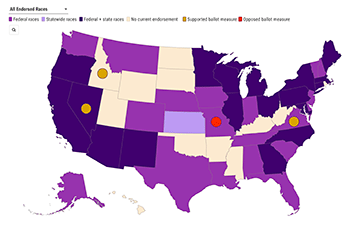
The key races we're invested in between now and November 3 to win back a reproductive freedom majority in the 2026 midterms.
Our electoral efforts connect voters with opportunities to make tangible change to help build a future where everyone is free to make their own decisions about their bodies, lives, and families.
We elect reproductive freedom champions from statehouses to the White House and protect and expand abortion rights and access through ballot measures.
Under a second Trump presidency, attacks on reproductive freedom have been relentless. But we’re tracking and fighting back against this extremist anti-abortion agenda.

Project 2025 is no longer just a “plan,” it’s a checklist of extreme policies being implemented at an alarming pace.
Mobilize your community. Hold lawmakers accountable. Organize for reproductive freedom!
Help turn values into votes by mobilizing voters and electing reproductive freedom champions up and down the ballot.
Memos & Media Guidance
TO: Interested Parties
FROM: Reproductive Freedom for All
RE: How Democrats Are Using Abortion in Their Closing Pitch
DATE: October 27, 2026
With one week until Election Day, Democrats in races up and down the ticket are making reproductive freedom a central closing argument. Across ads, debate stages, and campaign events, candidates are exposing Republicans’ support for abortion bans while emphasizing their own records protecting access to care.
Republicans’ response shows the contrast, and proves just how motivating reproductive freedom is to voters: They are scrubbing abortion positions from their websites and distancing themselves from their anti-abortion records because they know their extremism is disqualifying with voters.
Our battleground polling shows why. In our testing, messages about Republicans’ proposed abortion restrictions moved support by as much as five points and significantly increased motivation among independents. Support for a national abortion ban is among the most disqualifying positions for a candidate – on par with support for Medicaid cuts and raising taxes on the middle class.
The threats to our rights and freedoms are real. While the White House is currently delaying action to restrict abortion access for fear of voter backlash, they’ve promised “the gloves will be off” once the midterms are over. It’s clear Republicans are planning to use every lever of government to enact a national abortion ban after the election.
Democrats Are Closing on Abortion
Reproductive freedom is not a siloed, culture war issue – and voters know that. It is deeply tied to Democrats’ closing message around affordability. As Democrats hold Republicans accountable for soaring costs, the cost of raising a family is intrinsically part of that conversation. Our polling shows nearly 75% of voters say that their personal financial situation is a major factor when deciding to have a child.
Democrats are putting that polling into practice as November nears. Ads blanketing the airwaves in top races are calling out Republicans as anti-abortion extremists who back dangerous abortion bans and support Medicaid cuts that are raising costs and stripping access.
ABORTION-FOCUSED ADS:
DEBATES:
EVENTS:
Republicans are Running from Their Anti-Abortion Records
Republicans’ closing strategy provides its own evidence that abortion is moving voters. Across competitive races, candidates are deleting anti-abortion positions from their websites, refusing to acknowledge their opposition to reproductive rights, and attempting to rebrand themselves as moderates without accounting for their records.
WEBSITE COVER-UPS:
ATTEMPTING TO WALK BACK ANTI-ABORTION EXTREMISM:
Some Republicans are making desperate and disingenuous attempts to walk back their extreme anti-abortion records and positions. This isn’t a coincidence – Republicans understand anti-abortion extremism poses a real threat and is disqualifying for many voters. But it’s too little, too late to pull the wool over voters’ eyes.
ABORTION IS ON THE BALLOT
Beyond these key races, abortion is also shaping the political landscape through four ballot measures this year. Since the fall of Roe, abortion-related ballot measures have consistently mobilized voters across red, blue, and purple states. Voters in 16 states have backed ballot measures to expand abortion rights since 2022 – with more to come this year.
Here are the abortion ballot measures shaping the landscape in 2026:
When abortion is on the ballot – it overwhelmingly wins with voters. Reproductive Freedom for All is translating this energy into our midterm strategy and mobilizing voters to deliver key wins across the country.
Reproductive Freedom For All’s Impact
Reproductive Freedom for All launched our historic $23.5 million My Body. My Ballot. midterm campaign early to ensure voters understood what was at stake. The program includes a seven-figure paid communications campaign, a $2 million organizing investment across battleground states, 250 events hosted, and direct voter contact that has already reached more than 200,000 doors.
Our ads and mailers have exposed Republicans’ anti-abortion records in decisive races in Maine, Arizona, Pennsylvania, Michigan, New Hampshire, and Florida. Our organizers and 4.5 million members are mobilizing voters across Arizona, Michigan, Nevada, Georgia, and California. Our robust ground game is ensuring voters are armed with the knowledge of which candidates will protect reproductive freedom – and who’s trying to take away their rights.
The election will determine whether the administration’s threats advance unchecked or encounter meaningful opposition in Congress and across the states. Democrats are closing the campaign by speaking to the majority: Eight in 10 Americans support legal abortion. While Democrats hone in on abortion in the final stretch, Republicans’ retreat from their own records shows they understand the political danger of their agenda.
ICYMI National